

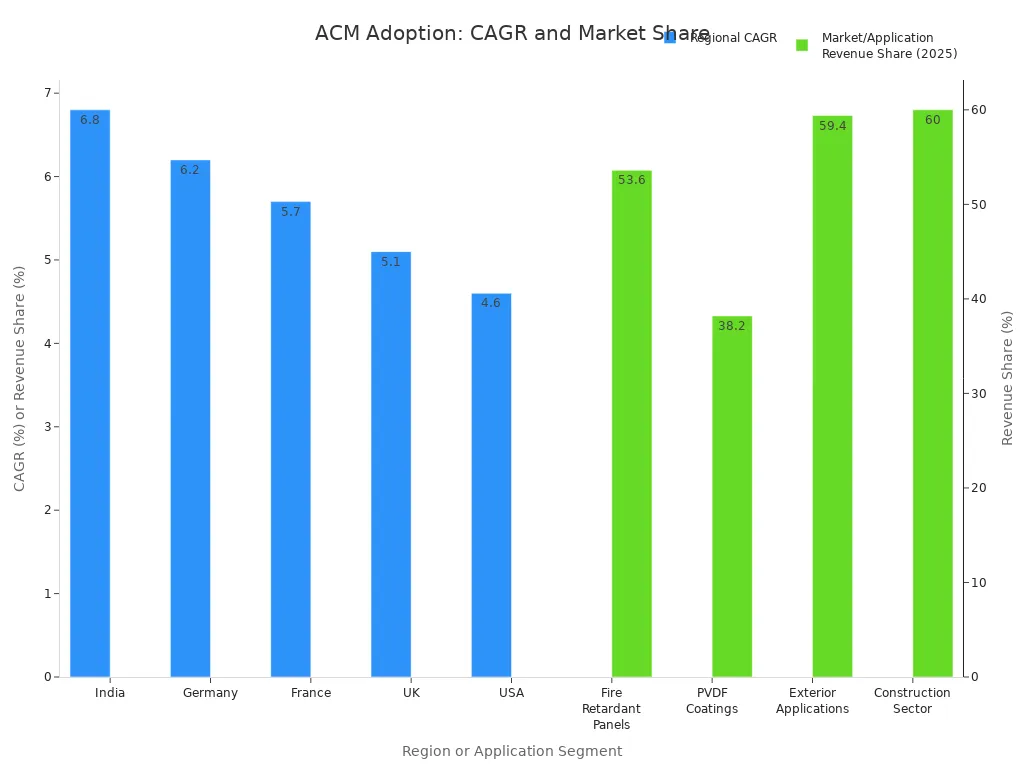
You see aluminum composite material changing the face of modern architecture and industry. Aluminum composite cladding now leads exterior applications with 59.4% of market revenue, thanks to innovations like fire-retardant panels and PVDF coatings. Demand for ACM material keeps rising as you look for lightweight, sustainable, and customizable solutions. The construction sector uses more than 60% of aluminum composite cladding, while digital printing and smart surfaces expand the possibilities for creative applications.

ACM Material Properties Enabling New Trends
Lightweight and High Strength of Aluminum Composite Material
You will notice that aluminum composite panels stand out for their lightweight properties and impressive strength. These panels weigh much less than solid aluminum, stone, or fiber cement, making them easy to handle and install. You can lift and move them with less effort, which speeds up construction and reduces labor costs. The low weight also means you do not need heavy support structures. Despite their lightness, aluminum composite panels have a high strength-to-weight ratio. This balance gives you panels that resist bending, breaking, and pressure. The table below shows how the properties of aluminum composite material compare to other cladding options:
| Material Type | Strength-to-Weight Ratio | Density (g/cm³) | Improvement Compared to Low-Carbon Steel |
|---|---|---|---|
| Laminated Aluminum Composite | 96.7 | 6.4 | +22% strength-to-weight ratio, -18% density |
| Commercial Low-Carbon Steel | (baseline) | (higher) | N/A |
You get the benefits of lightweight, low weight, and high strength in every panel, making aluminum composite panels a top choice for modern buildings.
Durability and Weather Resistance in ACM Material
When you choose aluminum composite panels, you gain excellent durability and weather resistance. These panels use advanced coatings like PVDF, which protect against rain, sun, and wind. The panels resist corrosion, so they last longer even in harsh environments. You do not have to worry about color fading or surface damage. The durability requirements for many projects are strict, but aluminum composite materials meet or exceed them. You can trust these panels for long-lasting performance. They also have high impact resistance, so they do not break easily. This makes them safe and reliable for both exterior and interior uses. You will find that the low weight and durability of these panels help reduce maintenance and replacement costs over time.
Design Flexibility and Aesthetic Options with Aluminum Composite Materials
You can explore endless design possibilities with ACM panels. These panels come in many colors, textures, and shapes. You can bend, curve, or fold them without damaging the surface. This flexibility lets you create unique building facades, decorative walls, and creative signage. Architects use aluminum composite panels to make modern, sleek exteriors and eye-catching interiors. The smooth surface of each panel supports high-resolution digital printing, so you can add custom graphics or branding. You can also choose from finishes that look like stone, wood, or metal. The lightweight and low weight of ACM panels make installation fast and easy, even for complex designs. You help set new trends in architecture and design by using aluminum composite material for both function and style.
Sustainability and Recyclability of ACM
You can make a big difference for the environment by choosing aluminum composite materials for your projects. These panels are 100% recyclable. When you finish using them, recycling plants crush and grind the panels. Special machines then separate the aluminum from the core. The aluminum can be used again and again to make new building products. This process supports a circular economy, where materials stay in use and waste stays low.
Many ACM panels, like ALUCOBOND® PLUS, use recycled aluminum. Some panels contain up to 26% recycled content. This helps you earn LEED credits for green building projects. Using recycled aluminum also means you need less new raw material, which lowers the impact on the planet.
Tip: Proper maintenance keeps ACM panels strong and looking new for many years. This reduces the need for replacement and cuts down on waste.
You also help the environment in other ways. ACM panels have great insulation properties. They help keep buildings warm in winter and cool in summer. This lowers energy use and reduces greenhouse gas emissions. The panels are light, so you do not need heavy steel supports. This saves resources and energy during construction.
When you use ACM as a sustainable exterior cladding material, you support a cleaner and greener future. Recycling keeps panels out of landfills and stops toxic emissions from burning waste. You help protect the environment while building strong, modern structures.
Key Benefits Driving ACM Material Adoption
Cost-Effectiveness of Aluminum Composite Material
You can save money on both installation and long-term upkeep when you choose aluminum composite cladding for your project. The installation cost for aluminum composite panels ranges from $35 to $55 per square foot. This is much lower than tilt-up concrete, which can cost $80 to $100 per square foot. The lightweight nature of aluminum composite material means you need less labor and equipment, so your project moves faster and costs less. Over 40 years, you will spend about 62% less on maintenance compared to precast concrete and up to 70% less than PVC. You also get energy savings because aluminum composite wall panel systems provide good insulation. The table below shows how aluminum composite cladding compares to other materials:
| Material | Installation Cost (per sq.ft.) | Maintenance Cost (Long-term) | Notes on Cost and Performance |
|---|---|---|---|
| Aluminum Composite | $35–$55 | 62% lower than precast concrete over 40 years | Lightweight, low maintenance, energy efficient, faster install |
| Tilt-up Concrete | $80–$100 | Higher maintenance | Heavy, labor-intensive installation |
| Wood | Lower upfront | Up to 30% higher maintenance over 20 years | Requires regular sealing, staining, repairs |
| Vinyl | Lowest upfront | High due to cracking and repairs | Prone to damage, less durable |
| Brick | High upfront | Low maintenance | Skilled labor needed, durable, good insulation |
| Stone | Very high upfront | Very low maintenance | Premium material and installation costs |
| Fiber Cement | Moderate | Moderate maintenance | Durable but requires repainting |
| Steel | Moderate | Higher maintenance due to rust | Needs coatings, moderate upfront cost |
You will find aluminum composite cladding to be an economical choice that balances upfront costs with long-term savings.
Easy Fabrication and Installation of ACM
You will notice that acm panels are easy to work with on any job site. The panels are lightweight, so you can move and lift them without much effort. You can cut, bend, and shape aluminum composite panels using simple tools. This flexibility lets you create custom designs for both flat and curved surfaces. Here is how the process works:
- Measure the panel dimensions carefully.
- Use professional tools to cut, fold, or bend the panels as needed.
- Apply a primer and weather barrier for waterproofing.
- Attach a mounting system to align the panels.
- Install the panels with clips and fasteners, adding supports for leveling.
You will see that aluminum composite cladding speeds up installation and reduces mistakes. The panels fit together smoothly, so you get a clean finish every time. You can also save on labor costs because the process is simple and quick.
Low Maintenance Requirements for Aluminum Composite Cladding
You will spend less time and money on upkeep when you use aluminum composite cladding. ACM panels resist moisture, rot, and damage, so you do not have to worry about repairs. The panels have strong UV resistance, which keeps colors bright and prevents fading. You only need to clean the panels a few times a year to keep them looking new. The table below highlights the main features:
| Feature | Description |
|---|---|
| Moisture, rot, damage resistance | Composite cladding resists moisture, rot, and damage, reducing upkeep needs. |
| UV resistance | Panels avoid fading over time due to UV resistance. |
| Maintenance | Requires only simple seasonal cleaning to maintain appearance. |
| Weather resistance | Strong against harsh weather including sunlight, moisture, and freezing cold. |
| Comparison to other materials | Lower maintenance requirements compared to timber or uPVC cladding. |
| Additional benefits | Enhances insulation and thermal efficiency; mimics real wood grain without its disadvantages. |
You can trust aluminum composite panels to last for many years with little effort. The benefits of using acm panels include less maintenance, strong durability, and a long-lasting appearance.
Enhanced Safety Features in ACM Material
You want your building to keep people safe. Aluminum composite material (ACM) panels help you meet strict safety standards in construction. Fire safety is a top priority for architects and builders. The core material inside ACM panels makes a big difference. Manufacturers use fire-retardant or non-combustible cores to stop flames from spreading. You can trust ACM panels that pass tough tests and earn important certifications.
- ACM panels must meet local and national building codes. These rules protect you and everyone inside the building.
- Products like ALUCOBOND® PLUS have passed the NFPA 285 fire code test. This test checks how fire moves on exterior walls of tall buildings. Passing NFPA 285 means you can use these panels safely in wood-framed, steel stud, and mass wall assemblies.
- NFPA 285 certification shows that ACM panels resist fire and help keep buildings safe. You get peace of mind knowing your project follows International Building Codes.
You also see ACM panels tested under ASTM E136. This test proves that many aluminum alloys do not burn or lose weight during fire exposure. The panels meet industry standards for non-combustible building materials. The FAA AC25.856-2A certification shows that aluminum does not burn in airplanes, even under extreme conditions. These results help update building codes and make ACM panels safer for everyone.
Note: Always check that all parts of the composite panel meet fire safety standards. The core, coatings, and adhesives must work together to protect your building.
You gain confidence when you choose ACM panels with proven safety features. These panels let you design creative spaces while keeping people protected. You see the benefits of using materials that meet high safety standards and support modern architecture.
Emerging and Innovative Applications of ACM Material

Modern Architectural Facades Using Aluminum Composite Cladding
You see aluminum composite cladding changing the look and performance of modern buildings. Architects use these panels to create bold, eye-catching facades that stand out in city skylines. You benefit from many new features in aluminum composite panels. Fire-retardant cores now replace older, banned materials, making your building safer. Nano coatings add extra water protection, so your cladding lasts longer and stays clean.
- You get cost savings because aluminum composite cladding is lightweight and easy to install.
- The panels resist corrosion and harsh weather, making them perfect for exterior use.
- You can choose from many colors, finishes, and textures, including options that look like zinc, copper, or stainless steel.
- Spectra coating technology lets you add unique colors and styles to your building.
- The flat surface of each panel gives your facade a smooth, modern look.
You can use metal composite material panels for both mid-rise and high-rise buildings. These panels stay strong in tough environments, even in places with earthquakes or strong winds. The design flexibility lets you curve or fold the panels for creative shapes. Substructure systems help manage building movement and keep your cladding secure. You also improve energy efficiency because the panels help regulate temperature and block noise. The recyclable nature of these materials supports green building goals and reduces your environmental impact.
Tip: When you choose aluminum composite cladding, you get a facade that is beautiful, safe, and built to last.
Interior Design and Decorative Elements with ACM
You can bring the benefits of acm panels inside your building. Designers use aluminum composite material for ceilings, columns, kitchen counters, and even custom furniture. You find many finishes, such as glossy, matte, mirror, and metallic, that help you create the perfect look for any room. The panels are lightweight and easy to cut, so you can install them yourself or with a small team.
| Application Area | Description and Visual Effects |
|---|---|
| Modern Wall Cladding | ACM panels offer many finishes and colors, letting you design dynamic walls with better insulation and sound control. |
| Innovative Ceiling Designs | Lightweight panels allow for creative ceiling shapes, improving lighting and ambiance. |
| Custom Furniture & Decor | You can make furniture with elegant curves or sharp angles, and the panels are easy to clean and maintain. |
| Finishes (Matte, Glossy, Metallic) | Different finishes change how light reflects, adding luxury or softness to your space. |
| Integration with Other Materials | Combine ACM with acrylic sheets for bold contrasts and extra depth in your design. |
| Functional Benefits | Durable, fire-resistant, and easy to maintain, these panels work well in busy areas and help with insulation. |
You enjoy practical benefits, too. The panels resist moisture and corrosion, so they work well in kitchens and bathrooms. You spend less time on cleaning because the surfaces are stain-resistant. The material meets fire safety standards, so you can use it in homes, offices, and public spaces without worry. You also save money because aluminum composite cladding costs less than many traditional materials and lasts longer.
You can use acm for both indoor and outdoor applications, giving you a unified style throughout your project.
Transportation and Automotive Uses of Aluminum Composite Materials
You see aluminum composite materials making big changes in the automotive and transportation industries. Car makers use more aluminum every year because it is lightweight and strong. In 2010, each car used about 154 kg of aluminum. By 2020, this number grew to 208 kg, and experts expect it to reach 233 kg by 2026. You get better fuel efficiency and lower emissions when you use lightweight materials like aluminum composite panels.
Manufacturers use advanced techniques such as high-pressure die casting and new aluminum sheet alloys to make car parts. You find aluminum composite cladding in vehicle body panels, battery enclosures for electric cars, and even in signage and display systems. These panels are up to 50% lighter than steel, which helps electric vehicles go farther on a single charge. The high strength-to-weight ratio and corrosion resistance make aluminum composite panels ideal for cars, buses, and trains.
You also see new trends like nanocomposites and eco-friendly acm material. These innovations improve performance and support sustainability. Automated manufacturing and 3D printing help make complex, lightweight parts faster and with less waste. The transportation sector now leads in adopting aluminum composite cladding for both safety and efficiency.
When you choose aluminum composite material for vehicles, you help create safer, greener, and more efficient transportation.
Signage and Branding Solutions with ACM Material
You see ACM panels everywhere in modern sign and graphic applications. These panels help you create signs that stand out and last for years. You can use ACM for storefronts, building facades, parking lot signs, and even decorative graphics inside malls or offices. The panels are lightweight, so you can move and install them with ease. You do not need heavy equipment or large teams to put up your signs.
- You get a smooth surface that supports high-quality digital printing. Your graphics look sharp and vibrant, which helps your brand catch attention.
- ACM panels resist corrosion and UV damage. Your signs stay bright and clear, even in harsh weather or direct sunlight.
- You can choose from many finishes, such as matte, gloss, brushed, or metallic. This lets you match your brand style or create a unique look.
- The panels are durable and do not bow or warp. Your signs keep their shape and look new for a long time.
- ACM signs cost less than solid aluminum but offer similar strength and a modern appearance.
You can use ACM for both indoor and outdoor signage. Products like Dibond and Alumalite give you extra weather resistance and impact protection. These panels work well in coastal or humid areas because they do not rust or corrode. You also help the environment because ACM signs are recyclable.
| Feature/Benefit | Explanation |
|---|---|
| Lightweight | Easy to handle and install, reducing labor and equipment costs. |
| Visual Quality | Smooth surface allows for vibrant, high-resolution printing and sharp graphics. |
| Durability | Resistant to weather, corrosion, and impact, ensuring a long lifespan for outdoor signage. |
| Customization | Available in many finishes and colors for unique branding solutions. |
| Sustainability | Recyclable panels support green building and branding goals. |
Tip: You can use ACM panels for wayfinding, regulatory, and decorative signs. This helps you create a unified look across all your branding materials.
Industrial Equipment and Infrastructure Applications of Aluminum Composite Material
You find ACM panels in many industrial and infrastructure projects. These panels help you build strong, modern structures that last. You see ACM used in building cladding systems for commercial centers, malls, and even automotive dealership facades. The panels are lightweight, so you can install them quickly and save on labor costs.
- You benefit from cost-effective cladding that resists harsh weather and corrosion. This means your buildings stay protected and look good for years.
- ACM panels offer fire resistance with modern fire-retardant cores. You keep your projects safe and up to code.
- The panels provide thermal insulation, which helps you control temperature and humidity inside buildings. This improves energy efficiency and lowers utility bills.
- You enjoy low maintenance because ACM does not rust or stain easily. The smooth surface makes cleaning simple.
- Sound insulation is another advantage. ACM panels help reduce noise, making spaces quieter and more comfortable.
You can choose from many colors, textures, and finishes. This lets you match the look of wood, stone, or metal without the extra weight or cost. Advanced nano aluminum composite panels give you even more water protection and a longer lifespan.
Many infrastructure projects use ACM for ventilated facade systems. These systems allow air to flow behind the panels, reducing heat and moisture buildup. This keeps your building cooler and extends the life of the materials. You see ACM in urban furniture, indoor partitions, and even in large-scale signage for public spaces.
| Project Type | ACM Application and Benefits |
|---|---|
| Automotive Dealership Facades | Lightweight panels for quick installation, modern look, and weather resistance. |
| Commercial Centers & Malls | Durable cladding with sound and thermal insulation, many finish options for design flexibility. |
| Ventilated Facade Systems | Natural ventilation reduces heat and moisture, improving energy efficiency and panel lifespan. |
| Urban Furniture & Partitions | Strong, easy-to-clean panels for public seating, kiosks, and interior dividers. |
Note: You support sustainability when you choose ACM for industrial applications. The panels are recyclable and help you meet green building standards.
Advances in ACM Technology and Fabrication

Improved Core Materials and Fire Resistance in ACM
You see big changes in aluminum composite cladding because of new core materials. Manufacturers now use non-combustible mineral cores instead of old polyethylene cores. These mineral cores help panels meet strict fire safety standards like ASTM E84 and NFPA 285. You get better protection for high-rise buildings and other fire-sensitive places. Modern production methods also reduce gaps and seams in cladding. This stops fire from spreading between panels. Surface treatments and advanced coatings help panels stand up to high temperatures. Some panels use intumescent coatings that swell when heated. These coatings block heat and flames, keeping buildings safer. You can trust aluminum composite cladding to protect people and property.
Digital Printing and Custom Finishes for Aluminum Composite Materials
You can create almost any look with digital printing on acm panels. Architects and designers use this technology to add patterns, bright colors, and custom graphics right onto aluminum composite cladding. You see these panels on building exteriors, interior walls, ceilings, and signs. Digital printing lets you choose images, illustrations, and branding elements for your project. You can pick from many textures, like stone, wood, or metal. Some acm products, such as DIBOND and C-TEK panels, work well with digital printing. These panels come in many colors, finishes, and thicknesses. You can cut, bend, and mount them to fit your design. 3D ACP sheets add depth and make buildings look unique. You get endless options for creative and personalized cladding.
Tip: Use digital printing to match your brand or create eye-catching designs for your building.
Smart and Functional Surface Technologies in ACM Material
You find new smart features in aluminum composite cladding. Engineers add nanomaterials like graphene and carbon nanotubes to acm panels. These materials make panels stronger and improve electrical and thermal properties. Some panels use shape memory alloys or piezoelectric materials. These let panels change shape, heal themselves, or harvest energy. You see these smart panels in aerospace, automotive, and civil infrastructure. Some acm panels can monitor their own health. They detect stress or damage by changing electrical resistance. Hybrid composites mix metals and fibers for better impact resistance and energy absorption. Advanced surface engineering improves wear and thermal resistance. Some panels even have wireless systems for remote monitoring. You help the environment by choosing panels with bio-based resins and recycling technologies. Smart acm material gives you strong, light, and multifunctional cladding for modern projects.
Prefabrication and Modular Construction with Aluminum Composite Cladding
You can speed up your building projects by using prefabrication and modular construction with aluminum composite cladding. This method lets you build parts of your project in a factory, then bring them to the site ready to install. You save time and money because you do not need to assemble everything outdoors. For example, you can install up to 25 prefabricated aluminum balconies in just six hours. These balconies arrive as complete units, so you avoid complex onsite assembly.
When you choose aluminum composite cladding for modular construction, you get many benefits:
- You reduce weather delays because factories make the panels indoors. You can keep working even when it rains or snows.
- You lower labor costs since you need fewer workers onsite. Prefabricated cladding panels come ready to use, so you spend less time installing them.
- You enjoy more design options. Factories can make aluminum composite cladding in many colors and patterns without slowing down the process.
- You improve quality. Factory settings give you better control over how each cladding panel is made.
The table below shows how prefabrication with aluminum composite cladding helps your project:
| Aspect | Evidence Summary |
|---|---|
| Faster Build Times | Modular construction allows you to prepare the site and make modules at the same time, so you finish faster. |
| Cost Savings | Factory work cuts down on waste and labor, saving you up to 20% on costs. |
| Labor Reduction | You need fewer workers onsite, which lowers labor costs by up to 20%. |
| Installation Efficiency | Prefabricated aluminum composite cladding arrives ready to install, saving time and effort. |
| Quality and Weather Impact | Factory production means better quality and fewer weather delays. |
| Investor Appeal | Faster completion gives you a quicker return on investment and lower financing costs. |
Tip: Prefabrication with aluminum composite cladding makes deep energy retrofits easier and more affordable. You can design for better energy performance and install panels quickly.
You see that modular construction with aluminum composite cladding gives you a faster, safer, and more flexible way to build. You finish projects sooner, save money, and get high-quality results every time.
Real-World Examples and Case Studies Featuring ACM Material
Iconic Buildings Showcasing Aluminum Composite Cladding
You can see how aluminum composite panels transform the look and function of famous buildings.
- The LACCD East Los Angeles College Classroom Building stands out as a modern landmark. Designers used aluminum composite panels to create a dynamic and sleek appearance.
- These panels are lightweight but strong, so you need less support structure.
- You get many choices for colors, textures, and finishes, which helps you match any design vision.
- The panels resist weather, corrosion, and UV rays, so the building stays beautiful for years.
- You also help the environment because aluminum composite panels are recyclable and reduce emissions during transport.
- You can use these panels for facades, interiors, and signage, making them very versatile.
- Quick and modular installation lets you finish projects faster and make changes in the future.
- The panels keep their shape and strength over time, even in tough weather.
When you choose aluminum composite panels for architectural cladding, you get a building that looks great and lasts long.
Innovative Commercial Spaces Using ACM Material
You find aluminum composite panels in many modern commercial spaces. These panels help you create bold designs and improve building performance.
- Many panels use recycled materials, which lowers the impact on the environment.
- Special coatings reflect sunlight, so buildings stay cooler and use less energy for air conditioning.
- These coatings also protect the panels from scratches, UV rays, and corrosion, so you spend less on repairs.
- Aluminum composite panels help you earn green building certifications like LEED and BREEAM.
- You can install these panels quickly because they are light and easy to handle, which saves time and money.
- You can use aluminum composite panels for walls, ceilings, furniture, facades, and even kiosks.
- The panels give you both protection and decoration, so your space looks good and works well.
- You can attach the panels in different ways, such as welding, screwing, or gluing, to fit your project needs.
You get a cost-effective and sustainable solution that supports creative design and long-term value.
Sustainable Urban Projects with Aluminum Composite Materials
You see cities like Denver using aluminum composite panels in many buildings. These panels contain recycled aluminum and are fully recyclable, which supports green building goals. You help save energy because the panels provide thermal insulation and create ventilated facades. This keeps buildings warm in winter and cool in summer, lowering energy use. The panels are durable and resist corrosion and UV rays, so they last longer and need less maintenance. You also reduce greenhouse gas emissions and support strong building performance in changing climates.
The Calgary Library is another great example. This large green engineering project uses metal composite panels for its exterior. The panels show how you can combine design flexibility, durability, and environmental responsibility in one building.
You can also find projects that use recycled PET and natural fibers in composite roofing. These projects create jobs, reduce landfill waste, and support the circular economy. When you use aluminum composite panels made with recycled materials, you help lower pollution and save resources.
Aluminum Composite Material in Industrial Equipment and Infrastructure
You see aluminum composite material (ACM) making a big difference in industrial equipment and infrastructure. Factories, warehouses, and power plants use ACM panels for many reasons. You get strong protection from weather, chemicals, and impacts. ACM panels help you build control rooms, machine enclosures, and clean rooms. These panels keep dust and moisture out, so your equipment stays safe.
You can use ACM for:
- Protective covers for machines
- Wall panels in factories
- Ceilings in clean rooms
- Enclosures for electrical systems
- Sound barriers along highways
ACM panels weigh less than steel or concrete. You can move and install them quickly. This saves you time and money. The panels resist rust and corrosion, so you do not need to paint them often. You also get good thermal insulation. This helps you control temperature in sensitive areas.
Tip: You can choose ACM panels with fire-resistant cores for extra safety in high-risk zones.
Many bridges and tunnels use ACM for cladding and signage. The panels stand up to rain, wind, and sun. You see ACM in airport terminals, train stations, and bus shelters. The panels look modern and stay clean with little effort.
Here is a quick comparison:
| Application Area | ACM Benefit |
|---|---|
| Machine Enclosures | Lightweight, strong, safe |
| Infrastructure Cladding | Weather and corrosion resistance |
| Sound Barriers | Good noise reduction |
| Electrical Cabinets | Fire and impact protection |
You help your projects last longer and look better when you use ACM. The panels support green building goals because you can recycle them. You make smart choices for safety, durability, and cost by choosing aluminum composite material in your industrial and infrastructure projects.
Considerations for Choosing ACM in Modern Projects
Project Requirements and Performance Needs for ACM Material
When you select aluminum composite material (ACM) for your project, you address many important needs. ACM panels help you meet modern construction demands because they are:
- Lightweight and easy to install, which lowers labor and structural costs.
- Durable, resisting rust, fading, and damage from weather or pests.
- Long-lasting, with a lifespan of 40–50 years when installed correctly.
- Sustainable, since they are highly recyclable and often contain recycled content.
- Flexible in design, offering many colors, textures, and finishes for creative projects.
- Strong against UV rays, corrosion, and harsh weather, making them suitable for many building types.
- Energy efficient, improving insulation and reducing heating and cooling costs.
You can use ACM panels in commercial, residential, educational, and healthcare buildings. Their versatility lets you create unique designs while meeting strict performance standards.
Regulatory and Safety Standards for Aluminum Composite Materials
You must follow strict safety and regulatory standards when using ACM panels. Fire safety is a top concern in North America, Europe, and Asia-Pacific. Many countries require fire-resistant or non-combustible panels, especially for high-rise and public buildings. Manufacturers now use mineral-filled or intumescent cores to meet these rules. The table below shows key standards in different regions:
| Region/Aspect | Regulatory and Safety Standards Details |
|---|---|
| UK | Post-Grenfell inspections led to over 270 buildings needing panel replacement. |
| Europe | Building codes require fire-resistant materials; over 52% of panels meet RoHS and REACH standards. |
| North America | NFPA 285 requires fire-resistant ACPs; more testing and compliance costs for exports. |
| Asia-Pacific | 42% of global shipments are fire-retardant due to stricter safety codes. |
| Market Trends | Shift to 6mm panel thickness for better safety and strength in high-rise buildings. |
| Environmental Compliance | Over 210 manufacturers offer recyclable ACPs with up to 85% recycled content. |
You should always check local codes and choose panels that meet or exceed these standards.
Environmental Impact and Certifications of ACM
You can support green building goals by choosing ACM panels with strong environmental credentials. Many ACM products help you earn LEED points and meet sustainability targets:
- ACM panels qualify for LEED credits by using 30% or more recycled aluminum.
- Panels are 100% recyclable, so you reduce landfill waste during installation and at end of life.
- High solar reflectance helps lower cooling costs and energy use.
- Environmental Product Declarations (EPDs) provide life-cycle data, helping you compare products and make informed choices.
- ACM panels are lightweight, durable, and easy to maintain, which saves resources over time.
Tip: Look for ACM panels with EPDs and high recycled content to boost your project’s sustainability and market appeal.
Cost and Lifecycle Analysis of Aluminum Composite Cladding
When you plan a building project, you want to know how much it will cost now and in the future. Aluminum composite cladding (ACM) gives you a smart balance between upfront spending and long-term savings. You pay a moderate to high initial price for ACM panels. However, you save money because the panels are easy to install. This means you spend less on labor and finish your project faster.
You also want to think about how much you will spend over the life of your building. ACM panels need very little maintenance. You do not have to paint them often or worry about rust. The panels resist weather and impacts, so they last a long time. You will not need to replace them as often as vinyl siding, which can crack or fade. Stone and brick cost more at first and take longer to install, but they can last even longer with fewer repairs.
Here is a quick look at how ACM compares to other facade materials:
| Facade Material | Initial Cost | Lifecycle Cost | Maintenance | Durability | Energy Efficiency | Installation Complexity | Fire Resistance | Acoustic Performance |
|---|---|---|---|---|---|---|---|---|
| Aluminum Composite (ACM) | Moderate to high | Low to moderate | Low | High | Excellent (insulated cores) | Low (prefabricated) | Variable (fire-retardant available) | High (good insulation) |
| Glass | High | Moderate to high | High | Moderate | High (with coatings) | Moderate | Moderate (tempered/laminated) | Poor (needs special glazing) |
| Metal | Moderate to high | Low to moderate | Low | Very high | Needs extra insulation | High | High (non-combustible) | Moderate |
- You save on energy bills because ACM panels with insulated cores keep heat in during winter and out during summer.
- You spend less on repairs and cleaning because the panels resist dirt and damage.
- You get good sound insulation, which makes your building quieter inside.
Tip: When you choose ACM, you invest in a facade that looks modern, lasts for decades, and helps you control costs over time. You make a smart choice for both your budget and your building’s performance.
You see aluminum composite material leading the way in modern design and construction. ACM panels give you lightweight strength, weather resistance, and energy savings. You find them in buildings, vehicles, and signs across Asia, North America, and Europe.
- Architects choose ACM for its design flexibility and easy installation.
- Builders value its fire safety, durability, and low maintenance.
- Companies invest in new coatings and custom finishes for better performance.
| Advantage | What You Gain |
|---|---|
| Lightweight | Easy handling and faster builds |
| Cost Efficiency | Lower labor and transport costs |
| Durability | Long-lasting, weatherproof panels |
| Design Options | Many colors and styles to choose |
Stay curious about ACM. You can use it to create safe, efficient, and beautiful spaces. Keep learning about new trends in aluminum composite cladding for your next project.
FAQ
What is ACM and where can you use it?
ACM stands for aluminum composite material. You can use it for building facades, signs, furniture, and even car parts. It works well indoors and outdoors because it is strong, light, and weather-resistant.
How do you clean and maintain ACM panels?
You can clean ACM panels with mild soap and water. Use a soft cloth or sponge. Avoid harsh chemicals or abrasive pads. Regular cleaning keeps panels looking new and helps them last longer.
Are ACM panels safe for high-rise buildings?
Yes, you can use ACM panels with fire-retardant or mineral cores for high-rise buildings. These panels meet strict safety codes. Always check that your panels have the right certifications for your project.
Can you recycle ACM panels after use?
Yes, you can recycle ACM panels. Recycling centers separate the aluminum from the core. The aluminum gets reused in new products. This process helps reduce waste and supports green building goals.
What design options do ACM panels offer?
You can choose from many colors, textures, and finishes. Some panels look like wood, stone, or metal. Digital printing lets you add custom graphics or logos. ACM panels give you many ways to create unique designs.


