

You must select the right panels for your project. This choice manages your budget and reduces waste from the start. Most manufacturers produce aluminium composite panels in widely available standard dimensions. Your project can use these common panels.
Standard ACM Panel Options
- Common Sizes: 4’x8′, 4’x10′, and 5’x10′ panels.
- Common Thicknesses: 3mm, 4mm, and 6mm for each panel.
Choosing the correct acm panel size is a vital step. The right aluminium composite panel helps you control costs. It also minimizes waste across all acm panels. An effective acm strategy starts with the right panel. This acm approach makes your work with acm panels efficient.
Understanding the Standard ACM Panel Size Chart
You can master project efficiency with a clear grasp of standard sizes. The standard acm panel size chart is your guide. It helps you plan your project with precision from the very beginning. Manufacturers create aluminium composite panels in these dimensions for maximum availability and cost-effectiveness. Understanding this chart allows you to make smart choices that save time and money.
Common Widths and Lengths
Most suppliers stock aluminium composite panels in a few key dimensions. Your project can often use these common sizes directly. This practice reduces lead times and lowers material costs.
The most prevalent standard sizes you will find are:
- 4′ x 8′ (1220mm x 2440mm)
- 4′ x 10′ (1220mm x 3050mm)
- 5′ x 10′ (1524mm x 3050mm)
Designing your project around these dimensions is a strategic move. It maximizes how much of each panel you use. This approach minimizes off-cuts and material waste, making your budget go further.
Standard Thicknesses and Their Applications
The thickness of an aluminium composite panel determines its strength, rigidity, and ideal use. You will typically choose from 3mm, 4mm, and 6mm panels. Each thickness serves a different purpose.
A 3mm panel is lightweight and flexible. You will find it works well for interior signage, point-of-purchase displays, and decorative wall coverings. When using any acm for exterior applications, you must ensure it meets strict building codes.
Building Code Compliance is Non-Negotiable Your project’s safety and legality depend on code compliance. Your acm manufacturer must provide documentation showing that their panels meet local and national standards. Key requirements include:
- An ICC/ES Research Report for product validation.
- Compliance with AC25 (Acceptance Criteria for Metal Composite Material).
- Wind load testing (ASTM E 330) to ensure panels withstand environmental forces.
- Air and water infiltration testing (ASTM E 283 and ASTM E 331) to guarantee weather resistance.
For more demanding jobs like exterior cladding and large-scale facades, you will need thicker panels. The choice between a 4mm and 6mm aluminium composite panel depends on structural demands. A 4mm panel is the industry’s versatile workhorse, while a 6mm panel offers superior strength for high-stress environments.
The following table compares these two powerful options:
| Feature/Application | 4mm ACM Panels | 6mm ACM Panels |
|---|---|---|
| Versatility | Most common choice for outdoor projects. | Best for high-demand, high-strength environments. |
| Structural Strength | Moderate strength for most applications. | Higher strength for significant wind and structural stress. |
| Typical Applications | Exterior wall cladding, commercial signs, billboards. | High-rise building curtain walls, large outdoor structures. |
| Cost-Effectiveness | A great balance of cost and performance. | More expensive but offers greater stability and durability. |
In short, 4mm acm panels provide an excellent solution for most exterior projects. You should select 6mm acm panels for high-rise buildings or structures in high-wind areas where load-bearing capacity is the top priority.
Imperial vs. Metric Dimensions
You will notice that acm panel size specifications often include both imperial (feet/inches) and metric (millimeters) units. The global nature of the acm industry means both systems are used. For example, a 4’x8′ panel is also listed as 1220mm x 2440mm.
💡 Pro Tip: Always confirm the unit of measurement with your supplier before placing an order. A simple mix-up between inches and millimeters can lead to costly errors and project delays. Double-checking ensures your fabricated panels arrive exactly as you specified.
Clear communication about dimensions is essential for a successful project. It prevents waste and ensures every panel fits perfectly.
The Role of Aluminium Composite Panels in Modern Design

You see aluminium composite panels everywhere in modern construction. Their sleek look and versatility make them a top choice for architects and designers. Understanding what an acm panel is helps you unlock its full potential for your projects. These panels offer unique advantages.
What Is an Aluminium Composite Panel?
An aluminium composite panel is a three-layer sandwich material. You have two thin sheets of aluminum bonded to a non-aluminum core. This construction makes each panel incredibly lightweight yet strong. The core material can vary, which changes the properties of the acm panel. This simple structure is the key to the success of every aluminium composite panel. You can use this acm product for many applications. The design of each panel is simple and effective.
Why Material Composition Matters for Sizing
The core of an aluminium composite panel directly impacts its performance. You will typically find two core types: polyethylene (PE) and fire-retardant (FR). The core material affects the panel’s rigidity, weight, and safety rating. A stronger core allows for larger panels without bending or warping. This is why you must consider the aluminium composite material composition. The right aluminium composite material ensures your panels meet project specifications. Your choice of acm affects the stability of the installed panels.
Key Benefits for Architectural Projects
You gain several key advantages when you choose aluminium composite panels for your projects. The material offers great value and performance. The benefits of acm make it a go-to for modern buildings.
- Lightweight: An aluminium composite panel is much lighter than solid aluminum. This makes transportation and installation easier and cheaper.
- Durability: These panels resist weather, corrosion, and UV rays, ensuring a long-lasting finish.
- Design Flexibility: You can cut, bend, and shape aluminium composite panels into complex forms. This gives you immense design flexibility.
- Aesthetic Variety: The panels come in a huge range of colors and finishes, offering great design flexibility for any vision.
These features make acm panels a smart and stylish choice for creating modern building facades and signage.
Customization: When to Order Custom-Cut Panels

Standard sizes work for many projects. Sometimes your vision requires something more. Customization lets you order aluminium composite panels cut to your exact specifications. This approach unlocks new creative possibilities. You should consider customization when your design goals go beyond standard dimensions.
Achieving Complex and Unique Designs
You can bring ambitious architectural ideas to life with custom-cut panels. Standard rectangular panels limit your creative options. Customization offers true design flexibility. You can create curves, angles, and unique shapes that make a building stand out. This level of detail turns a simple facade into a work of art.
Consider an iconic building like The Connor Group headquarters. Its design features a twisting, leaning structure.
- The building’s skin uses folded and triangulated sections of acm.
- Architects used 2,800 ALUCOBOND® panels to create this effect.
- About 95 percent of these panels were custom-fabricated into unique triangular shapes.
- The project had almost no rectangular panels.
This example shows how custom-cut aluminium composite panels are essential for complex designs. You need customization to achieve such a dynamic and non-repetitive look.
The Process of Ordering Custom Dimensions
Ordering custom acm panels requires careful planning. You first provide your fabricator with detailed drawings or digital files. These plans show the exact size and shape of each panel you need. The fabricator then uses this information to cut the aluminium composite panels precisely.
Plan for Lead Times Lead times for custom orders vary widely. A supplier might cut a simple custom acm panel in 2-4 days. However, ordering an aluminium composite panel with a custom color could take 12-14 weeks. You must confirm these timelines with your supplier early in the planning process.
Clear communication is key. You ensure your panels arrive ready for installation. This preparation prevents delays on the job site.
Reducing On-Site Labor and Errors
You can save time and money with factory-cut panels. When panels arrive pre-cut, your team spends less time measuring and cutting on-site. This reduces labor costs. It also minimizes the risk of costly cutting errors. Each panel fits perfectly into its designated spot. This precision makes the installation process faster and more efficient. Your project stays on schedule and within budget. The initial investment in customization often pays for itself through these on-site savings.
Cost-Effectiveness: Standard vs. Custom Sizing
You must balance your project’s budget with its design goals. The choice between standard and custom aluminium composite panels directly impacts your bottom line. Understanding the cost-effectiveness of each option helps you make the smartest financial decision for your project. A careful analysis reveals the true cost beyond the initial price tag.
Upfront Cost Per Square Foot
You will find that standard aluminium composite panels have a lower upfront cost. Manufacturers produce these panels in large volumes, which reduces their price per square foot. Custom-cut panels cost more initially because they require additional labor and machine time for fabrication.
The core material of an acm panel also affects its price. A fire-retardant (FR) core is more expensive than a standard polyethylene (PE) core. You can see the typical price ranges for standard 4mm acm panels below.
| Core Type | Thickness | Price Range (per sq ft) |
|---|---|---|
| PE Core | 4mm | $18 – $25 |
| FR Core | 4mm | $22 – $30 |
Custom sizes always add to these base costs. The fabricator charges extra for the specific cuts you need. This makes the initial price for each custom panel higher than a standard one.
Factoring in Labor and Waste Reduction
You should look beyond the sticker price to understand true cost-effectiveness. Custom-cut aluminium composite panels can save you money during installation. When panels arrive on-site ready to install, you reduce the need for skilled labor to cut them. This lowers your labor expenses and speeds up your project timeline.
💡 Think About Total Value: The higher upfront cost of custom panels can be offset by lower labor costs and zero material waste. Your project might achieve better overall value with customization.
Standard panels often create more waste. You may have to cut a large panel to get the smaller size you need. The leftover material, or off-cut, becomes waste. This means you paid for material you did not use. Customization eliminates this problem because you only order the exact acm panel size required. Every square foot of the aluminium composite panel you buy goes onto your building. This efficient use of acm material is a key benefit.
Calculating Your Project’s Total Cost
You need to calculate the total project cost to make an informed decision. This calculation includes material, labor, and waste. For standard panels, you must add the cost of waste and the on-site labor for cutting. For custom panels, your upfront material cost is higher, but your labor and waste costs are much lower.
You can also find savings with bulk orders. Many suppliers offer discounts when you purchase a larger quantity of panels.
- You can often get a discount when ordering five or more panels.
- Custom-printed acm panels may have an extra fee of $50–$150 per panel.
- You might find better volume discounts by sourcing your aluminium composite panel directly from a regional manufacturer.
By evaluating all these factors, you can accurately compare the cost-effectiveness of standard versus custom acm panels. This complete picture ensures you choose the best option for your budget and design.
Strategies for Waste Control and Maximum Yield
You can make your project more sustainable and cost-effective. Smart planning helps you get the most out of every aluminium composite panel. These strategies reduce waste and maximize your material yield. Your budget and the environment will thank you.
Optimizing Layouts with Nesting Software
You can use technology to minimize waste from your acm panels. Nesting software helps you plan the most efficient way to cut your parts from a large panel. It arranges all the shapes you need like a puzzle. This process ensures you use as much of the acm panel as possible. Many modern software solutions are designed specifically for acm fabrication.
- ShapeMaster Software offers integrated nesting for aluminum cladding manufacturers and is current for 2026.
- PANELBUILDER provides advanced nesting and is a global leader in software for cladding production.
Using this software for your acm project reduces off-cuts and saves you money on material.
Designing for Standard Sheet Dimensions
You can control waste before you even order your panels. Designing your project with standard sheet sizes in mind is a powerful strategy. Try to make your components fit perfectly within a 4’x8′ or 5’x10′ panel. This simple step drastically reduces the amount of leftover material.
Design Smart from the Start When you plan your design around a standard aluminium composite panel, you create fewer off-cuts. This proactive approach is one of the easiest ways to improve your project’s efficiency and lower costs. You buy fewer panels and throw less away.
This method requires some forethought during the design phase. The savings in material costs make it a worthwhile effort for any acm project.
Recycling and Repurposing Off-Cuts
You will likely have some leftover material even with the best planning. You do not have to throw these off-cuts away. The aluminum and core of acm panels are often recyclable. You should check with your local recycling facilities to see if they accept this material.
You can also find creative uses for smaller pieces. ♻️ Consider using them for:
- Small decorative accents
- Interior signage
- Custom fixtures or brackets
Repurposing these leftover panels turns potential waste into valuable assets for your project.
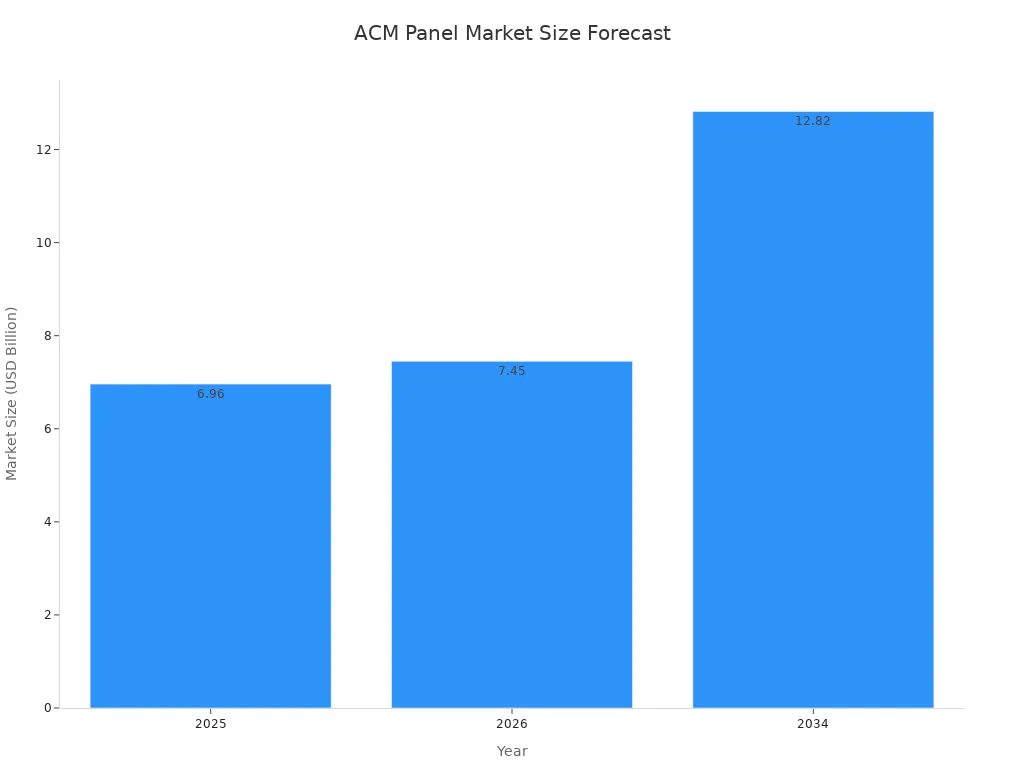
You must choose the right panels for your project. Standard panels offer value for simple jobs. Custom-cut panels provide precision for unique designs, reducing on-site labor. Your choice of acm panel size is a key strategic decision. The acm market is growing, showing the popularity of these panels.
ACM Market Size Forecast

A smart approach to sizing your aluminium composite panel balances design, budget, and efficiency. This becomes more important as the industry moves toward sustainable and smart panels. Your selection of an aluminium composite panel impacts your project’s future success.
FAQ
What is the most common ACM panel size?
You will find the 4’x8′ (1220mm x 2440mm) panel is the most common and widely available size. This dimension offers great versatility for many projects. It also provides an excellent starting point for cost-effective design and fabrication.
Which thickness should you use for outdoor projects?
You should choose 4mm or 6mm panels for outdoor applications. A 4mm panel works for most exterior cladding. You need a 6mm panel for high-rise buildings or areas with significant wind loads. These thicker panels provide necessary strength and durability.
What is the main difference between PE and FR cores?
The core material determines the panel’s fire resistance.
- PE (polyethylene) cores are standard and more flammable.
- FR (fire-retardant) cores contain minerals to slow the spread of fire. You must check local building codes to see which core type your project requires.
Can you paint aluminium composite panels?
Yes, you can paint ACM panels. You must use a high-quality paint system designed for aluminum surfaces. Proper surface preparation is crucial for a durable, long-lasting finish. Always follow the paint manufacturer’s specific instructions for the best results.


