

Aluminum Composite Panels (ACPs) are a specialized type of Aluminum Composite Material (ACM). While both share similarities, they are not identical. The difference between ACP and ACM lies in their composition, applications, and unique properties. ACPs consist of two aluminum sheets bonded to a lightweight core, making them highly durable and versatile.
The demand for lightweight and visually flexible materials like ACPs has surged due to the global shift toward sustainable construction practices.
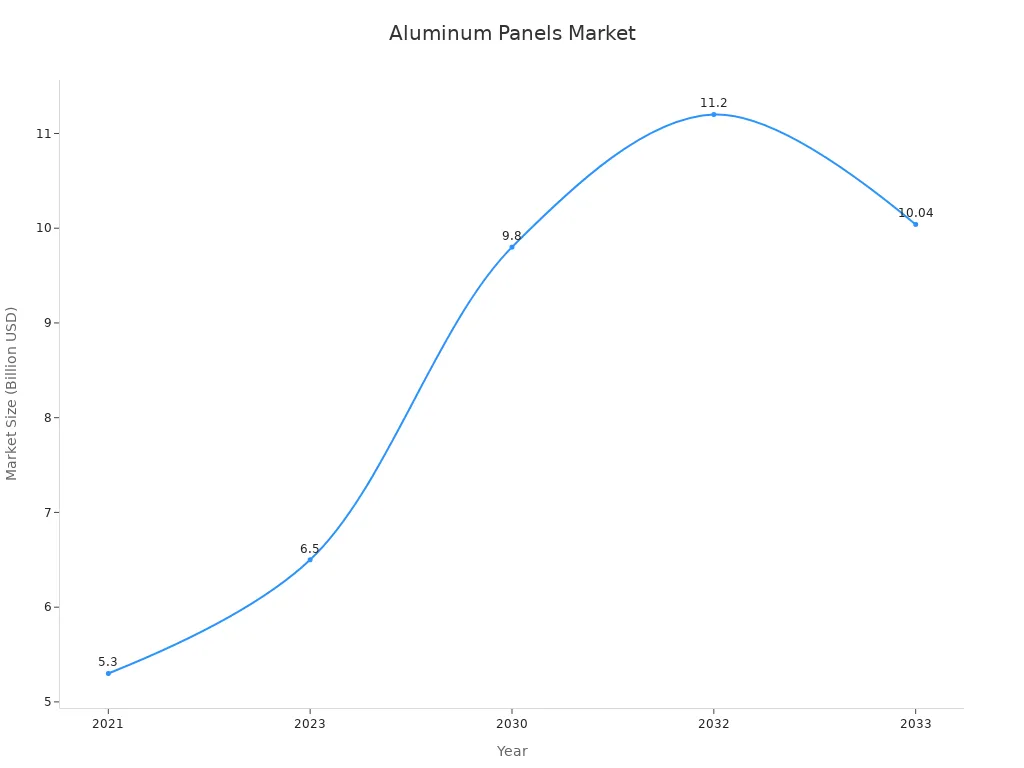
The global market for aluminum composite panels is projected to grow from USD 6.6 billion in 2024 to USD 10.0 billion by 2033, driven by rapid urbanization and infrastructure investments in regions like Asia-Pacific. Understanding these materials helps you make informed decisions for your construction or design needs.
Key Takeaways
- Aluminum Composite Panels (ACPs) are light and affordable. They work well for walls and signs.
- Aluminum Composite Material (ACM) is stronger against fire and lasts longer. It is good for tall buildings and risky places.
- Both ACPs and ACMs can be recycled. ACPs are simpler to recycle because of their basic core.
- Pick ACPs if you care about looks and price. Choose ACMs if safety and strength matter more.
What Are Aluminum Composite Panels (ACPs)?

Definition and Composition
Aluminum Composite Panels (ACPs) consist of two thin aluminum sheets bonded to a lightweight core. This core is typically made of thermoplastic material, which enhances the panel’s flexibility and durability. The manufacturing process involves compacting the core between the aluminum layers using a continuous lamination method. Unlike other materials, ACPs do not rely on adhesives, ensuring a strong bond between the layers.
ACPs are tested for bond integrity and peel strength to ensure their reliability. For instance, these panels exhibit a peel strength of 115 N mm/mm, even after exposure to water. This makes them suitable for environments where moisture resistance is essential.
Key Features of Aluminum Composite Panels
The key features of aluminum composite panels make them a preferred choice for various industries. These panels are lightweight, which simplifies transportation and installation. Their durability ensures long-term performance, even in harsh weather conditions. ACPs also offer excellent aesthetic options, including a wide range of colors, finishes, and textures.
Another standout feature is their resistance to delamination, as verified by ASTM D 1781 standards. This ensures that the panels maintain their structural integrity over time. Additionally, ACPs contribute to energy efficiency, aligning with the growing demand for sustainable construction materials.
Common Applications of ACPs
Aluminum composite panels are widely used in construction and design. In the building industry, they serve as cladding materials for facades, offering both protection and visual appeal. Their lightweight nature makes them ideal for signage and advertising, where ease of installation is crucial.
Interior designers often use ACPs for decorative purposes, such as wall partitions and ceilings. Their versatility extends to industrial applications, including vehicle body panels and specialized equipment. The booming construction industry and the trend toward sustainable practices have further fueled the demand for ACPs.
What Is Aluminum Composite Material (ACM)?
Definition and Composition
Aluminum Composite Material (ACM) refers to a versatile material made by bonding two aluminum sheets to a non-aluminum core. This core often consists of polyethylene or a fire-resistant mineral-filled material. The result is a lightweight yet sturdy panel that combines the strength of aluminum with the flexibility of composite materials. ACM panels are manufactured using advanced lamination techniques, ensuring a smooth finish and consistent quality.
You’ll find that ACM offers excellent thermal insulation and soundproofing properties. These features make it a popular choice for both functional and decorative applications. Its ability to resist corrosion and withstand harsh weather conditions further enhances its appeal.
Types of Aluminum Composite Material
When you shop for aluminum composite material (ACM) panels, you’ll see four main kinds. Each one is built for a different job:
- Standard panels – The everyday choice. They give stores, offices, and signs a clean, modern look.
- Fire-resistant panels – Packed with a mineral core that slows flames, they meet strict safety rules for places like schools and tall buildings.
- High-performance panels – Extra tough and long-lasting, so factories, warehouses, and rough weather can’t wear them out.
- Eco-friendly panels – Made with recycled materials, they still look sleek while cutting down on waste and carbon.
Pick the panel that matches your biggest goal—style, safety, strength, or sustainability—and your project will be set up for success.
Why Aluminum Composite Material (ACM) Is Winning Over Builders And Designers
Light as a feather but tough as nails, ACM offers clear advantages that make jobs easier and projects last longer:
Helps save energy. The panel’s core works like insulation, keeping rooms cooler in summer and warmer in winter.
Easy to move and install. Because the panels are light, crews can lift them quickly and you spend less on shipping.
Built to last. ACM stands up to rain, sun, and impact, so walls and signs keep their fresh look for years.
Endless design options. Choose almost any color, metallic finish, or textured surface to match your vision.
- Analysts expect the ACM market to grow about 7 % a year from 2025 to 2030.
- Lightweight ACM panels are now common in new buildings for sealing and insulation.
- Carmakers use ACM to cut vehicle weight and meet fuel-efficiency rules like CAFE.
- The push for green construction is boosting demand for eco-friendly ACM made with recycled content.
With these strengths, ACM has become a smart, sustainable pick for today’s construction and design projects.
Difference Between ACP and ACM
Composition and Core Materials
Aluminum Composite Panels (ACPs) and Aluminum Composite Materials (ACMs) may look alike, but their cores make a big difference:
| Panel Type | Core Material | What That Means for You |
|---|---|---|
| ACPs | Polyethylene (a light plastic) | • Lowest cost and weight • Great for signs, facades, and indoor décor where fire risk is low |
| ACMs | Mineral-filled, fire-resistant core (often polypropylene mixed with minerals) | • Extra protection in high-risk areas such as high-rise exteriors and airports • Better strength and stiffness |
Why ACMs handle fire better
More than 80 % of the core ingredients in ACM curtain-wall panels are inorganic minerals. Because minerals don’t burn easily, ACMs slow down flames and help walls stay intact longer during a fire.
- Choose ACPs when you need an affordable, lightweight panel and fire safety isn’t a major concern.
- Choose ACMs when fire resistance and structural integrity are critical.
| Feature | Aluminum Composite Panels (ACP) | Aluminum Composite Material (ACM) |
|---|---|---|
| Composition | Two aluminum sheets with a polyethylene core | Two aluminum sheets with a fire-resistant core (e.g., mineral-filled polypropylene) |
| Fire Resistance | Lower fire rating, often flammable (Class C or lower) | Higher fire rating, often Class A or B, suitable for high-risk environments |
This difference in core materials makes ACMs a preferred choice for projects requiring stringent fire safety standards, while ACPs remain ideal for budget-friendly applications.
| Panel type | Typical weight* | What that weight means in real life |
|---|---|---|
| ACP (polyethylene core) | ≈ 2.5 lb/ft² (about 12 kg/m²) | Super light—easy for two workers to lift, cut, and fasten; great for signs and décor |
| ACM (mineral-filled core) | Heavier than ACP (varies by brand) | Adds muscle and fire safety; used on high-rise façades and tough industrial jobs |
Why the weight gap matters
- ACPs: lower shipping costs, faster installs, and less structural load on the building frame.
- ACMs: extra mass gives higher wind-load strength and a fire-resistant core for code-sensitive projects.
Durability & strength at a glance
| What you need most | Pick this panel | Because… |
|---|---|---|
| Flexibility and moisture resistance (humid climates, curved shapes) | ACP | The plastic core bends without cracking and shrugs off moisture. |
| Top-tier fire resistance and structural stiffness (airports, skyscrapers, factory walls) | ACM | Mineral core slows flames and adds rigidity, helping walls stay intact under stress. |
Choose ACM when safety codes, high winds, or harsh conditions demand extra strength.
Choose ACP if light weight, easy handling, and cost savings top your list.
Standardized testing results highlight the superior durability of ACMs:
| Test | Standard | Result |
|---|---|---|
| Tension Testing of Metallic Materials – Elongation | ASTM E8 | Average 13.54% |
| Fire Test of Building Construction and Materials | ASTM E 119 | One and Two hour rated wall assembly successfully passed |
| Surface Burning Characteristics of Building Materials | ASTM E 84 | Flame Spread Index: 0, Smoke Developed Index: ≤ 5 |
ACPs provide excellent durability for general-purpose applications, while ACMs offer unmatched strength and safety for specialized projects.
If your project prioritizes fire safety and structural integrity, ACMs are the better choice. For lightweight and visually appealing solutions, ACPs are ideal.
Aesthetic Options: Colors, Finishes, and Textures
When it comes to aesthetics, both Aluminum Composite Panels (ACPs) and Aluminum Composite Material (ACM) offer impressive design flexibility. However, ACPs often stand out due to their extensive range of colors, finishes, and textures. These panels cater to modern architectural styles, allowing you to achieve intricate shapes and visually striking designs.
ACPs are available in a variety of finishes, including matte, gloss, metallic, and even wood or stone textures. This versatility makes them a popular choice for projects where visual appeal is a priority. For example, you can use ACPs to create vibrant building facades or eye-catching signage. ACMs, while also offering a range of finishes, tend to focus more on functional properties like fire resistance and durability.
The growing demand for aesthetically pleasing materials has driven manufacturers to enhance their offerings. Recent trends emphasize sustainable materials and innovative finishes that mimic natural elements. This shift reflects consumer preferences for materials that combine beauty with functionality.
The aluminum composite panel market analysis highlights a strong preference for materials with diverse aesthetic options. This demand has fueled the development of panels that balance design flexibility with durability.
| Feature | Aluminum Composite Panels (ACP) | Aluminum Composite Material (ACM) |
|---|---|---|
| Color Options | Wide range, including custom colors | Limited but functional palette |
| Finishes | Matte, gloss, metallic, wood, stone | Primarily matte or metallic |
| Design Flexibility | High, suitable for intricate shapes | Moderate, focused on durability |
If your project prioritizes aesthetics, ACPs provide unmatched options for creating visually appealing designs. ACMs, on the other hand, are better suited for applications where functionality takes precedence over appearance.
Cost and Affordability
Cost plays a crucial role in material selection. ACPs are generally more affordable than ACMs, making them an attractive option for budget-conscious projects. Their lightweight polyethylene core reduces production costs, which translates to lower prices for consumers.
ACMs, with their mineral-filled cores, tend to be more expensive. This higher cost reflects their enhanced fire resistance and structural integrity. For projects requiring stringent safety standards, the additional investment in ACMs may be justified.
The affordability of ACPs makes them a preferred choice for applications like signage and interior design, where cost efficiency is essential.
Here’s a quick comparison of cost-related factors:
| Feature | Aluminum Composite Panels (ACP) | Aluminum Composite Material (ACM) |
|---|---|---|
| Material Cost | Lower | Higher |
| Installation Cost | Lower due to lightweight nature | Higher due to added weight |
| Long-Term Value | Moderate | High, especially in fire-prone areas |
While ACPs offer a cost-effective solution for many applications, ACMs provide better long-term value in environments where safety and durability are critical.
Environmental Impact and Sustainability
Sustainability has become a key consideration in material selection. Both ACPs and ACMs contribute to eco-friendly construction practices, but their environmental profiles differ.
ACPs, with their lightweight design, have a lower embodied energy compared to traditional materials like steel or virgin aluminum. This makes them a more sustainable choice for projects aiming to reduce carbon footprints. However, increasing the fiber content in ACPs could further enhance their environmental performance.
ACMs, particularly those made with recycled materials, align with green building practices. Their fire-resistant cores often contain inorganic materials, which improve their environmental profile. Tools like the Life Cycle Assessment (LCA) developed by 3A Composites allow manufacturers to evaluate the ecological impact of these materials, ensuring transparency and sustainability.
The LCA indicates that composite materials, including ACPs, generally have a better strength-to-weight ratio, reducing the overall environmental impact.
| Feature | Aluminum Composite Panels (ACP) | Aluminum Composite Material (ACM) |
|---|---|---|
| Embodied Energy | Lower | Moderate |
| Recyclability | High | High |
| Sustainability Focus | Lightweight design | Fire-resistant, recycled cores |
If sustainability is a priority, both ACPs and ACMs offer eco-friendly options. However, ACPs may be more suitable for projects emphasizing lightweight construction, while ACMs excel in applications requiring fire safety and durability.
Applications of ACPs and ACMs

Construction and Cladding
Aluminum Composite Panels (ACPs) and Aluminum Composite Material (ACM) have revolutionized modern construction. Their lightweight nature and durability make them ideal for cladding applications. ACPs, with their polyethylene core, offer cost-effective solutions for facades and ceilings. They provide thermal insulation and corrosion resistance, ensuring long-term performance in various climates. ACMs, with their fire-resistant cores, are better suited for high-risk environments like skyscrapers or industrial facilities.
The construction industry heavily relies on these materials. In 2022, the construction segment accounted for approximately 46% of the aluminum composite panels market. This dominance reflects the growing demand for eco-friendly materials in green buildings. Both ACPs and ACMs contribute to sustainable construction by reducing energy consumption and offering recyclable options.
| Aspect | Details |
|---|---|
| Market Share (2022) | The construction segment held approximately 46% of the aluminum composite panels market. |
| Eco-Friendly Features | Anticipated to increase demand in green buildings. |
| Benefits | Thermal and acoustic insulation, corrosion resistance, and flexibility are key advantages. |
| Projected Growth | Increased use in decorative and cladding applications expected to drive market growth. |
ACPs excel in creating visually appealing facades with a wide range of colors and finishes. ACMs, on the other hand, prioritize safety and structural integrity, making them indispensable for modern construction projects.
Tip: For projects requiring fire safety and durability, ACMs are the better choice. For lightweight and aesthetic solutions, ACPs are ideal.
Signage and Advertising
ACPs and ACMs are widely used in signage due to their versatility and cost-effectiveness. ACPs, with their lightweight design, simplify installation and transportation. Their bonded structure enhances durability, making them resistant to chemicals, moisture, and UV radiation. ACMs, while slightly heavier, offer superior longevity and fire resistance, ensuring seamless signage solutions for high-traffic areas.
The global advertising industry has driven the demand for these materials. Businesses prefer ACPs for their aesthetic versatility, as they come in various colors and finishes. ACMs, with their recyclable cores, align with sustainability goals, making them a popular choice for eco-conscious brands.
- Cost-effectiveness: ACM offers a lower cost per square meter compared to solid aluminum, enabling sign-makers to manage larger projects.
- Simplified manufacturing: The faster production process of ACM ensures quicker turnaround times for signage.
- Durability: ACM can last over ten years, maintaining its aesthetic appeal.
- Sustainability: Both ACPs and ACMs are recyclable, contributing to environmental goals.
ACPs are perfect for creating vibrant advertising boards, while ACMs provide robust solutions for long-term installations. Their combined benefits make them indispensable for indoor and outdoor applications in the advertising sector.
Interior Design and Decorative Uses
In interior design, ACPs and ACMs offer unmatched versatility. Their lightweight structure allows for easy installation, making them suitable for wall partitions, ceilings, and decorative panels. ACPs, with their extensive range of colors and textures, cater to modern construction trends. ACMs, with their fire-resistant properties, ensure safety without compromising on aesthetics.
The market for aluminum composite panels is projected to exceed USD 12.4 billion by 2031, driven by their adoption in modern architectural designs. PE-coated ACPs, known for their customization options, are increasingly used in interior décor. These materials provide a seamless blend of functionality and style, making them a preferred choice for architects and designers.
The aluminum composite panels market is expected to grow from $6.53 billion in 2024 to $7.02 billion in 2025, reflecting a compound annual growth rate (CAGR) of 7.4%. This growth highlights the rising demand for ACPs and ACMs in modern construction and interior design.
Note: ACPs are ideal for creating intricate designs, while ACMs are better suited for projects prioritizing safety and durability.
Industrial and Specialized Applications
Aluminum Composite Panels (ACPs) and Aluminum Composite Material (ACM) have become indispensable in industrial and specialized applications. Their unique properties make them suitable for demanding environments where performance, durability, and functionality are critical. Let’s explore how these materials compare in such applications.
1. Use in Transportation and Automotive Industries
ACPs and ACMs play a significant role in transportation and automotive manufacturing. Their lightweight nature reduces vehicle weight, improving fuel efficiency and reducing emissions.
- ACPs: These panels are often used for vehicle body parts, such as side panels and roofs. Their flexibility allows manufacturers to create aerodynamic designs. ACPs also resist corrosion, making them ideal for vehicles exposed to harsh weather.
- ACMs: ACMs, with their fire-resistant cores, are preferred for applications requiring enhanced safety. For example, they are used in train interiors and airplane cabins to meet stringent fire safety regulations.
Tip: If you prioritize weight reduction and cost efficiency, ACPs are a great choice. For safety-critical applications, ACMs offer better fire resistance and structural integrity.
| Feature | Aluminum Composite Panels (ACP) | Aluminum Composite Material (ACM) |
|---|---|---|
| Weight Reduction | Excellent | Excellent |
| Fire Resistance | Moderate | High |
| Common Uses | Vehicle exteriors | Train interiors, airplane cabins |
2. Role in Industrial Equipment and Machinery
Both ACPs and ACMs are used in industrial equipment due to their strength and durability. However, their applications differ based on specific requirements.
- ACPs: These panels are used for protective casings and enclosures for machinery. Their lightweight design simplifies installation and maintenance.
- ACMs: ACMs are better suited for high-temperature environments. Their mineral-filled cores provide thermal insulation, making them ideal for equipment that generates heat.
Note: Choose ACPs for lightweight and cost-effective solutions. Opt for ACMs when thermal insulation and fire resistance are essential.
3. Applications in Marine and Offshore Industries
The marine and offshore industries demand materials that can withstand extreme conditions, including saltwater exposure and high humidity.
- ACPs: These panels are used for interior partitions and decorative elements in ships and yachts. Their corrosion resistance ensures long-term performance in marine environments.
- ACMs: ACMs are preferred for structural components in offshore platforms. Their fire-resistant cores enhance safety in environments where fire hazards are a concern.
| Feature | Aluminum Composite Panels (ACP) | Aluminum Composite Material (ACM) |
|---|---|---|
| Corrosion Resistance | High | High |
| Fire Safety | Moderate | High |
| Common Uses | Ship interiors | Offshore platform structures |
4. Specialized Applications in Electronics
In the electronics industry, ACPs and ACMs are used for enclosures, panels, and heat sinks. Their ability to combine lightweight design with durability makes them valuable in this sector.
- ACPs: These panels are used for electronic device casings where weight reduction is a priority. Their smooth surface also allows for easy branding and customization.
- ACMs: ACMs are chosen for applications requiring heat resistance. Their mineral-filled cores help dissipate heat, protecting sensitive electronic components.
Tip: For lightweight and customizable solutions, ACPs are ideal. For heat-sensitive applications, ACMs provide better thermal management.
5. Use in Renewable Energy Projects
The renewable energy sector increasingly relies on ACPs and ACMs for their lightweight and durable properties.
- ACPs: These panels are used in solar panel frames and wind turbine components. Their lightweight design reduces installation time and costs.
- ACMs: ACMs are preferred for battery enclosures in energy storage systems. Their fire-resistant cores enhance safety, especially in high-capacity batteries.
| Feature | Aluminum Composite Panels (ACP) | Aluminum Composite Material (ACM) |
|---|---|---|
| Lightweight Design | Excellent | Excellent |
| Fire Resistance | Moderate | High |
| Common Uses | Solar panels, wind turbines | Battery enclosures |
Conclusion
In industrial and specialized applications, ACPs and ACMs offer unique advantages. ACPs excel in lightweight and cost-effective solutions, while ACMs provide superior fire resistance and thermal insulation. Your choice should depend on the specific requirements of your project, whether it’s safety, durability, or cost efficiency.
Pros and Cons of ACPs and ACMs
Advantages of Aluminum Composite Panels
Aluminum Composite Panels (ACPs) offer several benefits that make them a popular choice across industries. Their lightweight structure simplifies transportation and installation, reducing labor costs. You’ll find that ACPs are highly durable, withstanding harsh weather and corrosion effectively. This durability ensures minimal maintenance, saving you time and money in the long run.
ACPs also provide excellent design flexibility. They come in a wide range of colors, finishes, and textures, allowing you to customize them to suit your project’s aesthetic needs. Their impact-resistant nature makes them suitable for environments prone to physical stress. Additionally, ACPs contribute to sustainable practices as they are recyclable, promoting a circular economy.
Another key advantage is their weather and corrosion-resistant properties. These panels maintain their appearance and structural integrity even in challenging climates. With an estimated lifespan of 30 to 50 years, ACPs offer long-term advantages for construction and design projects.
| Aspect | Pros |
|---|---|
| Ease of Installation | Pre-fabricated, lightweight, reduces labor costs |
| Environmental Sustainability | Highly recyclable, reduces waste, promotes circular economy |
| Low Maintenance Costs | Durable, minimal upkeep required |
| Design Flexibility | Available in various colors and finishes, customizable |
| Fire Resistance | Enhances fire safety standards, slows flame spread |
| Lifespan | Estimated service life of 30-50 years |
Disadvantages of Aluminum Composite Panels
While ACPs offer numerous benefits, they also have some limitations. Improper installation can lead to issues like thermal expansion, causing buckling or warping over time. Skilled labor is essential to ensure proper installation and avoid these problems.
ACPs may also face durability concerns in extreme conditions. Prolonged exposure to UV radiation or moisture can result in discoloration or degradation. Although ACPs are recyclable, their composite nature complicates the recycling process, especially in areas with limited facilities.
Fire resistance and safety depend on the use of fire-retardant materials. Without these, ACPs may contribute to fire spread, posing risks in certain applications. Additionally, the initial cost of ACPs can be higher than traditional materials, though their long-term advantages often offset this expense.
- Fire Safety: ACPs require fire-retardant materials to meet safety standards.
- Durability Concerns: UV radiation and moisture can affect their longevity.
- Thermal Expansion: Improper installation may lead to buckling or warping.
- Recycling Challenges: Composite structure complicates disposal and recycling.
Advantages of Aluminum Composite Material
Aluminum Composite Material (ACM) stands out for its superior fire resistance and safety. The mineral-filled core enhances fire safety standards, making ACMs suitable for high-risk environments. You’ll also appreciate their durability, as ACMs maintain structural integrity even under extreme conditions.
ACMs offer excellent thermal insulation, helping regulate indoor temperatures and improving energy efficiency. Their weather and corrosion-resistant properties ensure long-term performance, even in demanding environments. Like ACPs, ACMs are recyclable, aligning with sustainable building practices.
Design flexibility is another advantage of ACMs. While their aesthetic options may not be as extensive as ACPs, they still provide a range of finishes to meet functional and decorative needs. ACMs also deliver impact-resistant performance, making them ideal for industrial and specialized applications.
Tip: If your project prioritizes fire resistance and safety, ACMs are the better choice.
| Aspect | Pros |
|---|---|
| Fire Resistance | Mineral-filled core enhances safety standards |
| Durability | Maintains structural integrity in extreme conditions |
| Thermal Insulation | Improves energy efficiency |
| Weather and Corrosion Resistance | Ensures long-term performance in demanding environments |
| Recyclability | Aligns with sustainable building practices |
| Impact Resistance | Suitable for industrial and specialized applications |
Disadvantages of Aluminum Composite Material
While Aluminum Composite Material (ACM) offers many benefits, it also has some drawbacks you should consider before choosing it for your project. These disadvantages often depend on the specific application and environment.
- Higher Cost
ACM panels typically cost more than other materials like Aluminum Composite Panels (ACPs). This is due to their advanced core materials, such as mineral-filled cores, which enhance fire resistance and structural integrity. If your project has a tight budget, this higher cost might pose a challenge. - Heavier Weight
The mineral-filled core in ACM panels increases their weight compared to ACPs. This added weight can complicate transportation and installation, especially for large-scale projects. You may need specialized equipment or additional labor, which could increase overall project costs. - Limited Aesthetic Options
Although ACM panels offer some design flexibility, their aesthetic range is narrower than ACPs. You might find fewer color and finish options, as ACMs prioritize functional properties like fire resistance and durability over visual appeal. - Complex Recycling Process
Recycling ACM panels can be more challenging due to their composite structure. While they are recyclable, separating the aluminum layers from the mineral-filled core requires specialized facilities. This limitation could impact projects aiming for high sustainability standards. - Safety Concerns in Improper Use
Although ACM panels excel in safety when used correctly, improper installation or the use of non-compliant materials can compromise their fire-resistant properties. You must ensure that the panels meet safety standards and are installed by qualified professionals to avoid potential risks.
Note: ACM panels are ideal for projects where safety and durability are top priorities. However, you should weigh these advantages against their cost and recycling challenges to make an informed decision.
Aluminum Composite Panels (ACPs) and Aluminum Composite Material (ACM) offer distinct advantages for construction and design. ACPs excel in lightweight applications, making them ideal for cladding and signage. ACMs provide fire-resistant cores and enhanced durability, which suit specialized industrial uses. The Aluminum Composite Panels Global Market Report 2025 highlights the growing demand for these materials, driven by global economic shifts. With market trends favoring sustainable and versatile solutions, you can choose ACPs for aesthetic flexibility or ACMs for safety-critical projects. Your decision should align with your budget and environmental goals.
FAQ
1. Are ACPs and ACMs the same material?
No, ACPs are a type of ACM. ACPs have a polyethylene core, while ACMs can include fire-resistant cores. ACPs focus on lightweight and aesthetic uses, whereas ACMs prioritize safety and durability.
2. Which is better for fire safety: ACP or ACM?
ACMs are better for fire safety. Their mineral-filled cores meet higher fire resistance standards. ACPs, with polyethylene cores, are less fire-resistant unless enhanced with fire-retardant materials.
Tip: Choose ACMs for projects in high-risk environments like skyscrapers or industrial facilities.
3. Can ACPs and ACMs be recycled?
Yes, both materials are recyclable. However, ACMs with mineral-filled cores may require specialized recycling facilities. ACPs, with simpler cores, are easier to recycle in most locations.
4. Which material is more cost-effective for signage?
ACPs are more cost-effective for signage. Their lightweight design reduces material and installation costs. ACMs, while more durable, are better suited for long-term or safety-critical signage.
5. How do ACPs and ACMs differ in design flexibility?
ACPs offer greater design flexibility with a wider range of colors, finishes, and textures. ACMs focus more on functional properties, offering fewer aesthetic options but excelling in safety and durability.
Note: Use ACPs for visually striking designs and ACMs for functional, safety-focused projects.


