
The mistake most buyers make before ordering acm panels 4×8 is specifying only the sheet size — then discovering the thickness, core type, or coating they defaulted to is wrong for their application.[6] A 3mm thermoplastic core panel hung on a high-rise facade, or a 6mm fire-rated sheet ordered for a retail sign that only needed 3mm, costs money in both directions. This guide pins down every number before you commit.
The numbers that matter
| Specification | Standard Value |
|---|---|
| Sheet dimensions | 4 ft × 8 ft (1220 mm × 2440 mm) |
| Thickness range | 3mm / 4mm / 5mm / 6mm |
| Aluminum skin thickness | 0.18mm–0.50mm per face |
| Weight range | ~1.5–2.6 lb/ft² depending on thickness (thermoplastic core; mineral-core panels run approximately 8–12% heavier) |
| Fire-rated core standard | ASTM E84 Class A (United States) |
| Surface coatings available | PVDF, polyester, brushed, mirror, marble, custom printed |
| Typical lead time (factory-direct) | 10–20 business days |
| Minimum order (custom spec) | 50–100 sheets (varies by supplier) |
What “4×8” actually means in ACM?
A 4×8 designation refers to a sheet measuring exactly 4 feet wide by 8 feet tall — 48 × 96 inches, or 1220 × 2440 mm in metric. That is the industry standard cut for aluminum composite material (ACM) because it maps directly to North American construction and signage workflows: stud spacing runs on 16-inch or 24-inch centers, router tables and flatbed CNC machines are built around 4×8 work envelopes, and flatbed trucks and container loads are packed to 4×8 efficiency.
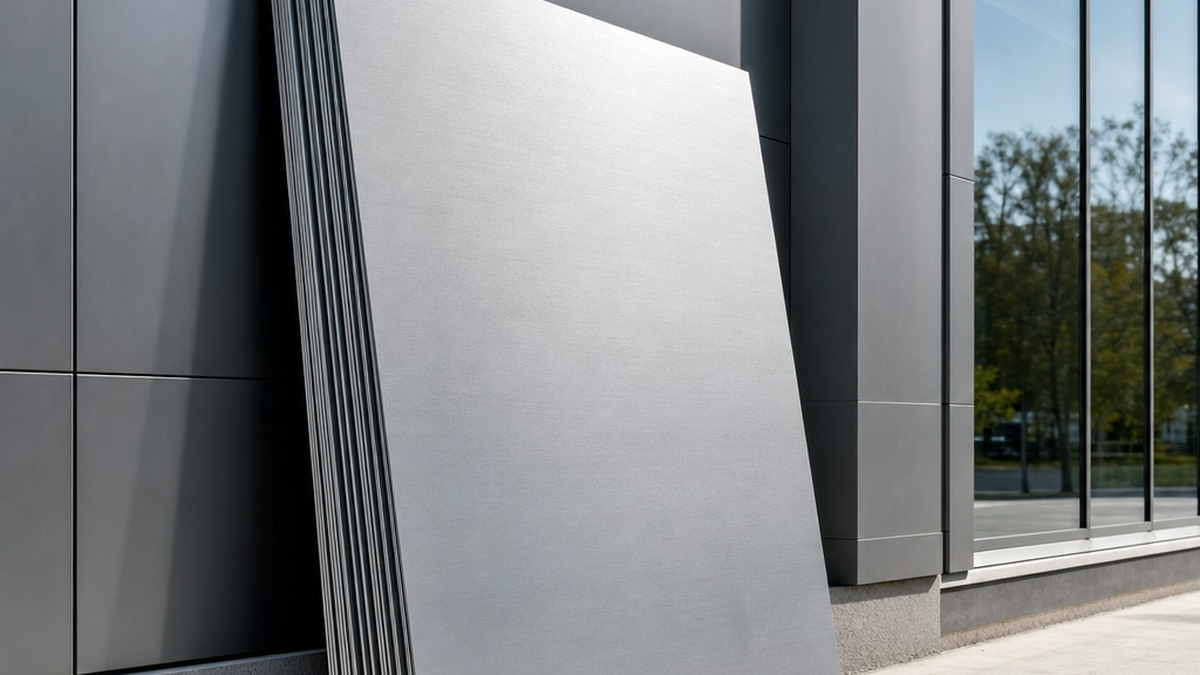
The format also aligns with standard substrate sizes used across the sign industry and in interior fit-out. When fabricators quote “acm board 4×8” or “aluminum composite panels 4×8,” they mean this same nominal sheet — the 1220 × 2440 mm blank before any routing, bending, or lamination. Every downstream operation — cassette cladding, routed channel letters, direct-to-substrate digital print — is designed around it.
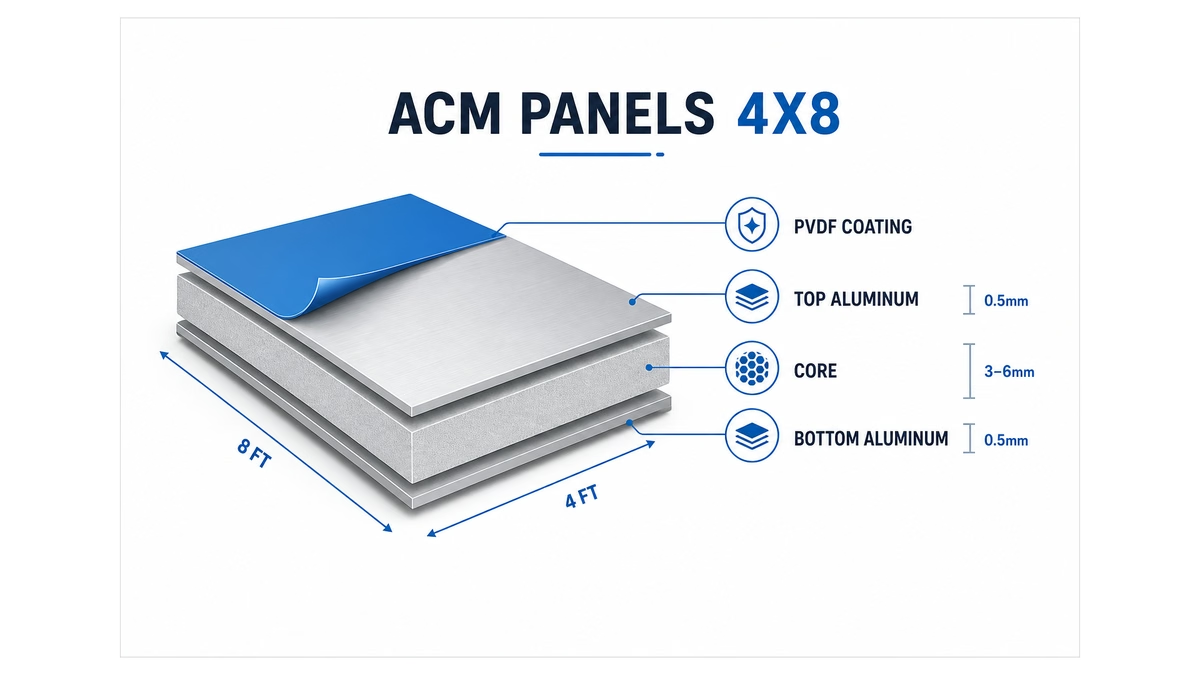
An aluminum composite panel in this format consists of two pre-finished aluminum skins bonded to a core material, typically a thermoplastic core (polyethylene) or a mineral-filled fire-resistant core. The core ACM sandwich gives the sheet rigidity well beyond what a solid aluminum sheet of the same weight would deliver, which is why the 4×8 format dominates both 4×8 panels for walls in commercial interiors and 4×8 panels exterior cladding applications.she
Worth checking: Confirm whether your supplier’s “4×8” is nominal or finished. Some fabricators trim to 47.5 × 95.5 inches for tongue-and-groove installations. If you are ordering aluminum composite panels 4×8 for a flush-panel curtain wall, a 6mm difference per sheet compounds across an entire facade.
Standard thickness options for ACM panels 4×8
The right thickness is determined by structural load, span, and application — not personal preference.
| Thickness | Aluminum Skin | Typical Core | Best Application |
|---|---|---|---|
| 3mm | 0.18–0.21mm | Thermoplastic | Indoor signage, retail displays, exhibition panels, 4×8 panels decorative |
| 4mm | 0.21–0.30mm | Thermoplastic or mineral | Exterior signage, light cladding, canopy fascias |
| 5mm | 0.30–0.40mm | Mineral/FR | Mid-rise facade panels, transit advertising, 4×8 panels for ceiling in commercial spaces |
| 6mm | 0.40–0.50mm | Mineral FR or solid PE | High-rise cladding, panels 4×8 exterior siding on Type I/II construction, structural faces |
3mm is the workhorse of the sign industry. Most channel-letter backer panels, flat-cut letters, and indoor 4×8 sheets for wall displays run at 3mm because weight and material cost matter more than stiffness at indoor spans. The thermoplastic core routs cleanly and bends easily.
4mm is the contractor default for exterior applications that don’t require a fire-rated core — storefront cladding, gas-station canopies, and medium-span fascias. Many customers ordering panels 4×8 siding for low-rise retail buildings land here.
5mm and 6mm are structural territory. Panels spanning more than 24 inches between subframe supports, or installations where wind load calculations demand higher rigidity, move into these thicknesses. Fire-rated mineral cores are standard at 6mm for any project under ASTM E84 scrutiny.
We stock all four thicknesses across our full PVDF lineup — over 100 standard colors — and our dedicated Fireproof ACP line covers every thickness where a fire-rated mineral core is required. For brushed and mirror finishes, 3mm and 4mm account for most orders because those applications are almost always interior.
How much does a 4×8 ACM panel weigh?
Weight drives two things: subframe design and shipping cost. Get this number before you finalize your wall system.
| Thickness | Approx. Weight per 4×8 Sheet (lbs) | Approx. Weight per ft² (lbs) |
|---|---|---|
| 3mm | ~11.5 | ~1.5 |
| 4mm | ~14.2 | ~1.8 |
| 5mm | ~17.6 | ~2.2 |
| 6mm | ~21.0 | ~2.6 |
Figures based on standard aluminum skins (0.3mm each) with thermoplastic core. Mineral-filled fire-rated cores run approximately 8–12% heavier at equivalent thickness.
That difference matters when you’re hanging panels 4×8 from a lightweight steel subframe on a four-story facade — or when your freight quote comes back for a 500-sheet order.
How to Choose the Right ACM Panels 4×8?
Choosing the right ACM panels 4×8 comes down to four key factors: core type, coating, panel thickness, and fire-rating requirements.
1. Choose the Right Core
- PE (polyethylene) core is lightweight, easy to machine, and ideal for interior applications and most exterior signage.
- Fire-rated mineral core is required for many commercial building projects where local fire codes apply.
Tip: Always request the supplier’s ASTM E84 test report instead of relying on “fire-rated” claims.
2. Select the Right Coating
- PVDF coating offers excellent UV and weather resistance, making it the best choice for exterior cladding.
- Polyester coating is more economical and suitable for interior applications or short-term signage.
3. Match the Panel Thickness to Your Project
Choose the panel thickness based on the span and application:
- 3mm: Indoor signs and displays
- 4mm: Exterior signage and light cladding
- 5–6mm: Large facades and projects requiring higher rigidity
4. Verify Fire-Rating Requirements
Before placing an order, confirm whether your project requires ASTM E84, NFPA 285, or both. Fire-code requirements vary by location, so always check with your local authority before selecting a panel.
Price factors for aluminum composite material panels
The price of aluminum composite material (ACM) panels isn’t fixed — it moves on four variables, and confusing “cheapest 4×8 paneling” with “lowest total cost” is one of the most common procurement errors we see.
Aluminum LME spot price is the underlying commodity driver. Aluminum is priced against LME spot rates[4], which fluctuate daily. A mill-direct factory-direct supplier passes those movements to you; a distributor buying in bulk absorbs some volatility but charges a margin for it.
Core type is the second lever. A 4mm thermoplastic core panel runs lower than a 4mm mineral fire-rated panel because mineral filler costs more than PE resin. The fire-rated premium typically adds 15–25% to panel cost.
Coating specification is the third. PVDF-coated sheets cost more than polyester-coated sheets. Custom printed and digitally printable surfaces carry an additional setup charge.
Order volume and customization close the loop. Standard white or brushed 4×8 sheets at pallet quantities ship from inventory. Custom colors, non-standard dimensions, or OEM printing require a production run with minimums that vary by supplier. Our typical custom production orders placed for the United States market run at 50 sheets minimum for standard color variants, higher for specialty finishes.
3mm thermoplastic white is the most affordable entry point for material acm; PVDF fire-rated material at volume carries a meaningful premium — request a quote for current pricing, since LME fluctuations can move per-sheet cost several dollars within a single quarter.
That variance is worth planning for.
Avoid: Selecting a supplier based on per-sheet price alone without confirming coating type and fire-rating documentation. A low-cost “fire-rated” panel without a traceable ASTM E84 certificate number is not a fire-rated panel — it’s a liability.
Common applications of aluminum composite material (ACM) 4×8 panels
Building facades and exterior cladding account for the largest volume. Pre-finished aluminum skin panels replace painted concrete, EIFS, and traditional stucco on commercial building envelopes because they install faster, stay flat, and don’t require on-site painting. 4×8 sheets for wall systems dominate mid-rise office and retail construction across every major US metro market.
Signage is where ACM became ubiquitous. The sign industry runs on material acm — flat aluminum bonded panels that are rigid enough to mount without a backing structure, light enough to ship economically, and coated for direct UV output. Nearly every gas station canopy fascia, big-box store exterior sign, and monument sign base in the United States is built from 4×8 ACM blanks, typically 3mm thermoplastic core. Double-sided tape and VHB mounting tape are standard for attaching routed sign faces to ACM backer panels — the flat, dimensionally stable surface is what makes tape bonding reliable at scale. Custom printed ACM for trade show displays and retail interior graphics is a growing share of orders our sign-industry customers place with us.
Interior design and architectural millwork represent a fast-growing segment. Brushed and mirror ACM replace heavy glass and solid aluminum sheet in lobby feature walls, elevator cabs, and 4×8 panels for ceiling coffers. The weight advantage is dramatic: a 4×8 mirror-finish ACM at 3mm weighs under 12 lbs, versus 55+ lbs for a comparable solid aluminum sheet. Our brushed finish is a particularly consistent seller in this category.
Transportation uses ACM for truck body panels, trailer side walls, and transit vehicle interiors, where the combination of flatness, light weight, and impact resistance is hard to match with other composite material options.
FAQ
How much do ACM panels cost?
Standard 3mm thermoplastic-core panels typically run $30 to $55 per sheet. Fire-rated FR or A2-core panels jump to $70 to $120. PVDF-coated panels cost more than polyester-coated equivalents. Buying in full pallet quantities from distributors like Discount Metal or Alucobond-certified suppliers usually drops the per-sheet price by 15 to 25 percent compared to single-sheet retail orders.
What are the disadvantages of using ACM panels?
Standard ACM panels with polyethylene cores carry a significant fire risk and are restricted or banned on buildings over a certain height under IBC and local US building codes. The aluminum skin, typically 0.2 to 0.5mm thick, dents more easily than solid aluminum. Thermal expansion causes visible waviness if panels are not detailed correctly. Cutting and routing require carbide tooling, adding fabrication cost. Warranty coverage on coatings can be voided by improper installation, which is common on first-time projects.
Where can I buy ACM sheets?
ACM panels 4×8 are sold through specialty metal distributors, sign supply wholesalers, and some big-box lumber yards across the United States. Online distributors such as Metals Depot, Online Metals, and Discount Metal Fabricating ship cut-to-size or full sheets nationally. Sign-supply houses like Grimco and FELLERS stock high-volume inventories for fabricators. For fire-rated or PVDF-finished panels, contacting a regional Alucobond, Reynobond, or Alpolic authorized distributor directly usually yields better pricing and documented compliance documentation.
How much does a 4×8 sheet of aluminum cost?
A bare 4×8 sheet of aluminum in the United States ranges from about $40 for thin 0.025-inch alloy sheet up to $300 or more for 0.25-inch plate, depending on alloy and temper. ACM panels are not the same product — their aluminum skins are only 0.2 to 0.5mm thick bonded to a core, making them lighter and cheaper per sheet than solid aluminum of comparable rigidity. Mineral-filled fire-rated cores run approximately 8–12% heavier at equivalent thickness. If your project requires ACM specifically, compare ACM pricing rather than solid aluminum sheet pricing.
Sources
[1] Flame Spread Ratings: What Class A, B & C Mean for … — ngctestingservices.com
[2] AAMA 2605-05 – Voluntary Specification, Performance … — downloads.regulations.gov
[3] NFPA 285 Standard Development — nfpa.org
[4] LME Aluminium – Metals — lme.com
[5] CHAPTER 14 EXTERIOR WALLS – ICC Digital Codes — codes.iccsafe.org
[6] C-TEK® Aluminum Composite Material (ACM) Panels … — curbellplastics.com


