
When selecting aluminum composite panels (ACP), many buyers focus only on the total panel thickness, such as 4mm or 6mm. However, the actual performance of an ACP panel is strongly influenced by the aluminum skin thickness on each face.
ACP Skin Thickness affects important factors such as panel stiffness, durability, flatness, and suitability for different applications. A 4mm ACP panel with a 0.15mm aluminum skin can perform very differently from a 4mm panel with a 0.30mm aluminum skin.
This guide explains how aluminum skin thickness works, what thickness options are available, and how to choose the right ACP specification for different building applications.
Key Specs at a Glance
| Specification point | Typical range / value |
|---|---|
| Standard ACP panel total thickness | 3mm, 4mm, 5mm, 6mm |
| Aluminum skin thickness — economy / sign grade | Around 0.10mm–0.18mm per face |
| Aluminum skin thickness — standard architectural grade | Around 0.20mm–0.30mm per face |
| Aluminum skin thickness — heavy-duty / curtain wall applications | Around 0.40mm–0.50mm per face |
| Common aluminum alloys | 3003 and 5005 series (some products also use 1100 series) |
| Core material — standard ACP | Polyethylene (PE) |
| Core material — fire-rated ACP | Mineral-filled or FR core |
| PVDF coating for exterior applications | Typically 25μm or above |
| Building code reference | Confirm applicable local building requirements and project specifications |
| Weight increase from thicker aluminum skin | Increasing both aluminum skins by 0.1mm adds approximately 0.54kg/m² |
What Skin Thickness Actually Measures in Aluminium Composite Panels
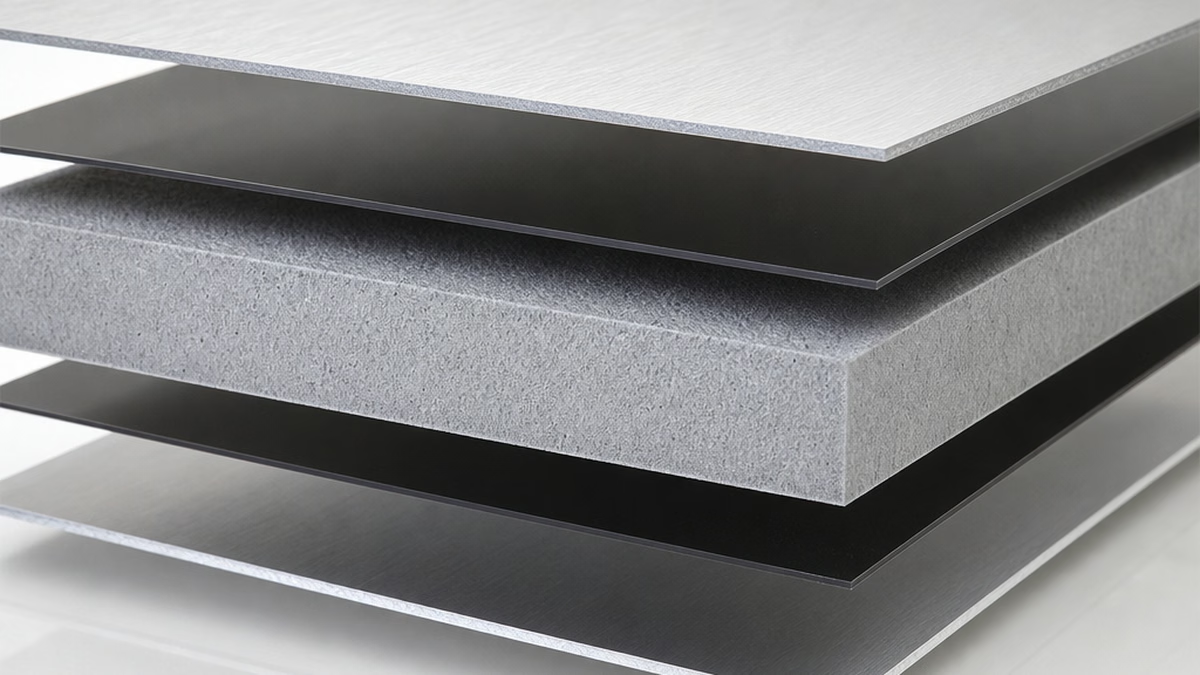
The total thickness of an aluminium composite panel — such as the “4mm” or “6mm” specification shown on a product sheet — describes the complete sandwich structure, including the aluminum skins and the core material.
Inside this structure is a core layer, which may be polyethylene (PE) for standard ACP panels or a mineral-filled fire-retardant core for FR-grade panels. Bonded to both sides of the core are aluminum alloy layers. Aluminium composite panel skin thickness refers specifically to the thickness of these aluminum face sheets, usually measured in millimetres per side.
A simple way to understand the difference is to compare an ACP panel to a book cover. The total page count represents the overall thickness, but the cover material determines how rigid and durable the book feels. Similarly, the aluminum skins contribute significantly to the panel’s stiffness, impact resistance, and long-term performance.
A 4mm ACP panel may be produced with aluminum skins ranging from around 0.10mm to 0.50mm per face depending on the intended application. Two panels with the same total thickness can therefore have very different performance characteristics.
For example, a 4mm panel with 0.15mm aluminum skins may be suitable for signage, decorative applications, or lower-demand projects, while a 4mm panel with 0.30mm skins provides higher stiffness and is commonly selected for architectural exterior cladding.
How Is Aluminum Skin Thickness Measured?
In production and quality inspection, aluminum skin thickness can be verified using measurement tools such as an ultrasonic thickness gauge or a micrometer on a cross-section sample.
Manufacturers typically check multiple points across the panel to confirm thickness consistency. Measuring several locations helps identify variations caused by production factors such as material tolerance, coating thickness, or uneven bonding.
For buyers comparing ACP quotations, it is important to confirm that the stated aluminum thickness refers to the actual aluminum skin thickness per face, not the total panel thickness.
Composite Panel Thicknesses and Where Each Belongs
| Aluminum skin thickness (per face) | Typical applications |
|---|---|
| 0.10mm–0.18mm | Signage, displays, interior decoration, and light-duty applications |
| 0.20mm–0.25mm | Interior applications, sheltered exterior areas, and some low-rise projects |
| 0.30mm | General exterior cladding and most architectural applications |
| 0.40mm–0.50mm | Curtain walls, large panels, high wind load areas |
| 0.50mm+ with FR core | Fire-rated facade systems and special performance requirements |
The most important point is that aluminum skin thickness should match the application requirements.
For many exterior architectural projects, 0.30mm aluminum skins are commonly selected because they provide a practical balance between stiffness, durability, weight, and cost. However, the correct specification depends on factors such as panel size, building height, wind load, installation method, and local regulations.
Thinner aluminum skins may still be suitable for indoor or decorative applications where structural performance requirements are lower. Buyers should always evaluate the complete system rather than selecting ACP panels based only on total thickness.
How to Select ACP Sheet Thickness for Different Applications
The selection process can be simplified into three steps:
- Identify the exposure environment
- Evaluate structural requirements
- Confirm fire and building code requirements
Step 1 — Consider the Exposure Environment
Interior applications such as display boards, exhibition panels, and decorative walls usually face limited exposure to sunlight, rain, and wind. In these cases, thinner aluminum skins may provide sufficient performance while reducing material cost and weight.
Exterior applications require greater attention to durability. Buildings exposed to strong sunlight, humidity, coastal environments, or frequent wind loads generally require thicker aluminum skins to improve rigidity and long-term appearance.
For high-rise or large facade projects, the required ACP specification should be determined through project engineering calculations and applicable building standards.
Step 2 — Evaluate Structural Requirements
Thicker aluminum skins generally improve panel stiffness and impact resistance. This becomes increasingly important when panels are:
- installed in larger sizes
- exposed to higher wind pressure
- used on high-rise buildings
- installed with wider unsupported spans
For example, a large facade panel may require a thicker aluminum skin than a small decorative panel, even if both use the same 4mm ACP structure.
Selecting insufficient skin thickness can result in reduced flatness, lower rigidity, and poorer appearance after installation.
Step 3 — Check Fire Classification Requirements
For fire-rated ACP applications, aluminum skin thickness is only one part of the specification.
The core material is equally important. Projects requiring improved fire performance usually use mineral-filled or fire-retardant cores together with appropriate aluminum skin thickness.
The final ACP selection should meet the fire classification and building requirements specified for the project and location.
Does Thicker Aluminium Composite Panel Skin Always Mean Better Performance?
Not always.
A thicker aluminium skin can improve panel stiffness, impact resistance, and durability, but it is not the only factor that determines ACP performance. The correct specification depends on the application, installation environment, panel size, core material, alloy, and coating system.
For example, a 0.30mm aluminum skin is commonly selected for many exterior architectural applications because it provides a good balance between rigidity, weight, and cost. However, increasing the skin thickness alone does not automatically create a better-performing panel if other components, such as the core or bonding system, are not suitable.
Thicker aluminum skins are especially valuable for applications where panels face:
- higher wind loads
- larger panel sizes
- frequent impact exposure
- demanding outdoor environments
Compared with thinner skins, thicker aluminum layers generally provide better flatness retention and higher resistance to dents and handling damage.
However, extremely thick aluminum skins may provide diminishing returns in some applications. Additional thickness increases material cost and panel weight, while the overall performance improvement depends on the complete ACP structure.
The core material is another important factor.
An ACP panel is a sandwich structure. The aluminum skins provide strength and rigidity, while the core helps maintain the distance between the two skins and contributes to the overall stiffness of the panel.
A high-quality aluminum skin combined with an unsuitable core may not deliver the expected performance. Therefore, skin thickness and core specification should always be evaluated together.
For most ACP projects, the right approach is not simply choosing the thickest aluminum skin available. Instead, select the specification based on:
- building height
- wind pressure requirements
- panel dimensions
- installation method
- environmental exposure
- fire performance requirements
A properly selected ACP system can achieve the required performance without unnecessary material costs.
How Aluminium Composite Panel Skin Thickness Influences Material Cost
Aluminum content is one of the main factors affecting ACP material cost because aluminum is typically more expensive than the core material.
When aluminum skin thickness increases, the amount of aluminum used per square meter also increases, which directly affects the panel price.
For example, moving from a thinner skin specification to a thicker architectural-grade specification can increase:
- raw material cost
- panel weight
- transportation cost
- structural load requirements
However, the lowest purchase price is not always the lowest project cost. Selecting insufficient skin thickness for an exterior application may lead to problems such as reduced flatness, lower impact resistance, or premature replacement.
Relative Cost Comparison by Aluminum Skin Thickness
| Aluminum skin thickness (per face) | Relative material cost | Typical application |
|---|---|---|
| 0.15mm | Lower | Signage, indoor, decorative applications |
| 0.20mm | Moderate | Interior and some light-duty applications |
| 0.30mm | Higher | General exterior architectural cladding |
| 0.40mm–0.50mm | Highest | Curtain walls and high-performance facade applications |
When comparing ACP quotations, buyers should not evaluate price based only on total panel thickness.
A quotation should clearly specify:
- aluminum skin thickness per face
- aluminum alloy
- core type
- coating system
- fire classification (if required)
Two panels may both be described as “4mm ACP,” but their performance and cost can be significantly different depending on these specifications.
5 Specification Mistakes That Cause Brazilian ACP Projects to Fail
Mistake 1: Specifying Total Panel Thickness Only
A common mistake is selecting ACP only by total thickness, such as choosing “4mm ACP” without checking aluminum skin thickness.
The total thickness includes both aluminum skins and the core. Two 4mm panels can have different aluminum content and different performance levels.
Always confirm the aluminum skin thickness separately when comparing products.
Mistake 2: Using Interior-Grade Panels for Exterior Applications
Interior-grade ACP panels may not provide the durability required for outdoor exposure.
Exterior applications should consider factors such as:
- sunlight exposure
- humidity
- temperature changes
- wind loads
- required service life
Using a thinner or unsuitable panel specification outdoors may result in reduced rigidity, surface deformation, or shorter service life.
Mistake 3: Ignoring Aluminum Alloy Selection
Not all aluminum alloys provide the same performance.
Common ACP aluminum skins use alloys such as 3003 and 5005 because they provide a balance of strength, formability, and coating performance.
The alloy affects:
- mechanical strength
- surface quality
- coating adhesion
- long-term appearance
Therefore, buyers should consider alloy type together with skin thickness.
Mistake 4: Confusing Skin Thickness with Coating Thickness
Aluminum skin thickness and coating thickness are two different specifications.
The aluminum skin affects:
- stiffness
- impact resistance
- structural performance
The coating system affects:
- color retention
- weather resistance
- corrosion protection
A thicker coating does not replace a stronger aluminum skin, and a thicker aluminum skin does not replace a suitable coating system.
Mistake 5: Applying the Same Specification to Every Area of a Building
Different facade areas may experience different conditions.
For example:
- entrance areas may require better impact resistance
- high-rise sections may require higher wind resistance
- sheltered areas may have lower performance requirements
A single aluminum skin thickness may not be suitable for every part of a project.
The best approach is to select ACP specifications according to each application area and project requirement.
FAQ
How thick are ACP sheets in MM?
Standard ACP sheets are commonly available in total thicknesses of 3mm, 4mm, 5mm, and 6mm. However, total panel thickness alone does not determine performance. The aluminum skin thickness per face, core material, coating system, and application requirements are also important factors.
For exterior architectural applications, ACP panels commonly use aluminum skins around 0.30mm–0.50mm per face. Thinner skins may be suitable for signage, interior, or lower-demand applications where high rigidity is not required.
Is 1.2 mm aluminium strong enough?
A 1.2mm solid aluminum sheet and an ACP panel should not be compared directly. ACP panels achieve high stiffness through their sandwich structure, where two aluminum skins work together with the core material.
For exterior applications, ACP skin thickness is typically selected based on factors such as panel size, wind load, building height, and installation requirements.
What are the disadvantages of aluminum composite panels?
The disadvantages of ACP panels depend on the product type and application.
Standard PE-core panels may have lower fire performance compared with fire-rated panels. Thinner aluminum skins may also provide less impact resistance and rigidity.
In addition, ACP performance depends on the aluminum alloy, coating system, core material, manufacturing quality, and correct installation.
Sources
[1] NBR 15575: What You Need to Know About the Standard — eiku.com.br
[2] Testing of aluminium composite panels in a cone calorimeter — sciencedirect.com
[3] ACP Sheet Thickness Guide: 3mm, 4mm & 6mm — vivaacp.com
[4] How to evaluate a high-quality aluminum composite panel? — acmmanufacturer.com
[5] What is the general thickness of the aluminum composite … — alusignacm.com
[6] What is the aluminium composite panel? Advantages … — stacbond.com


